Property Type & Space Planning
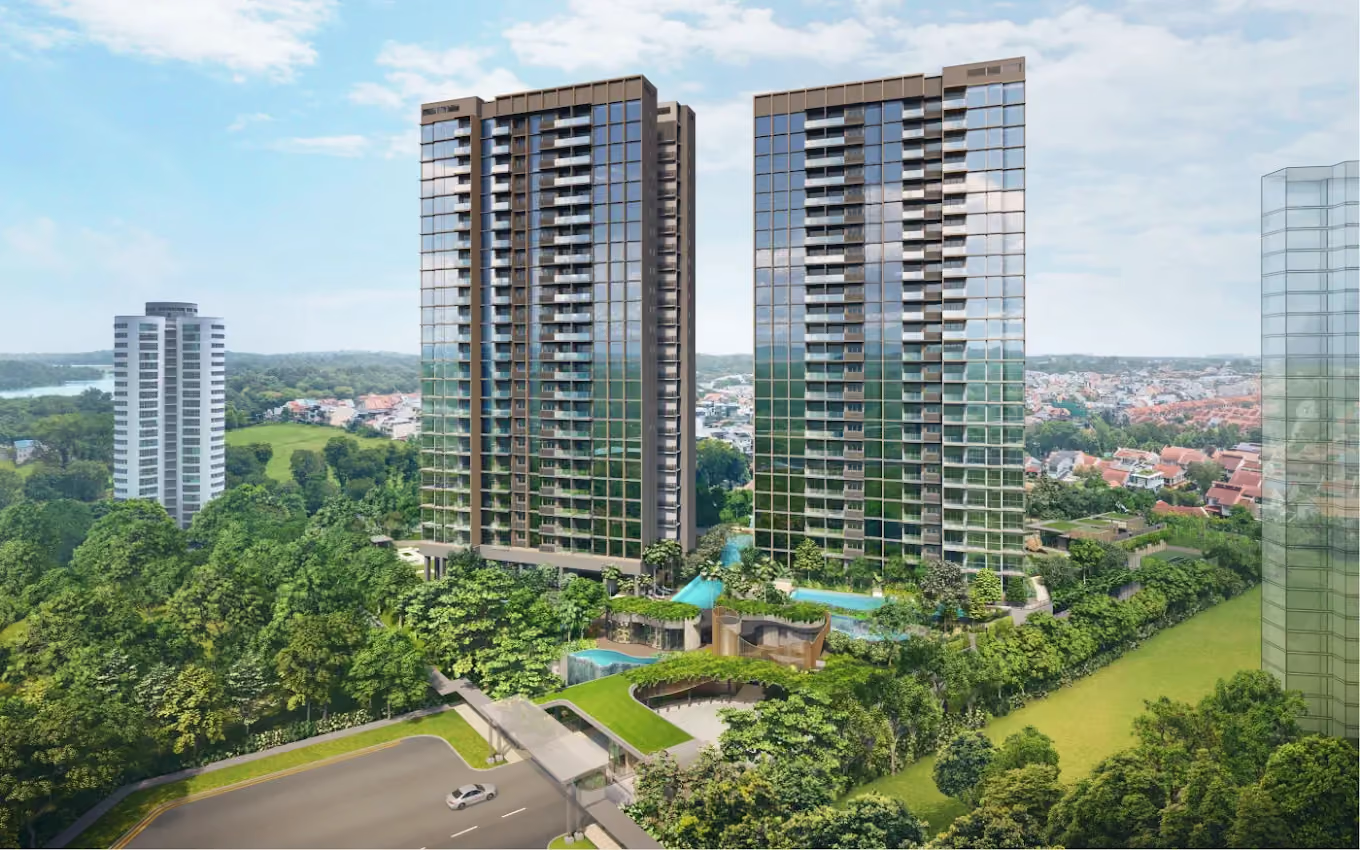
UrbanVille @ Woodlands Renovation
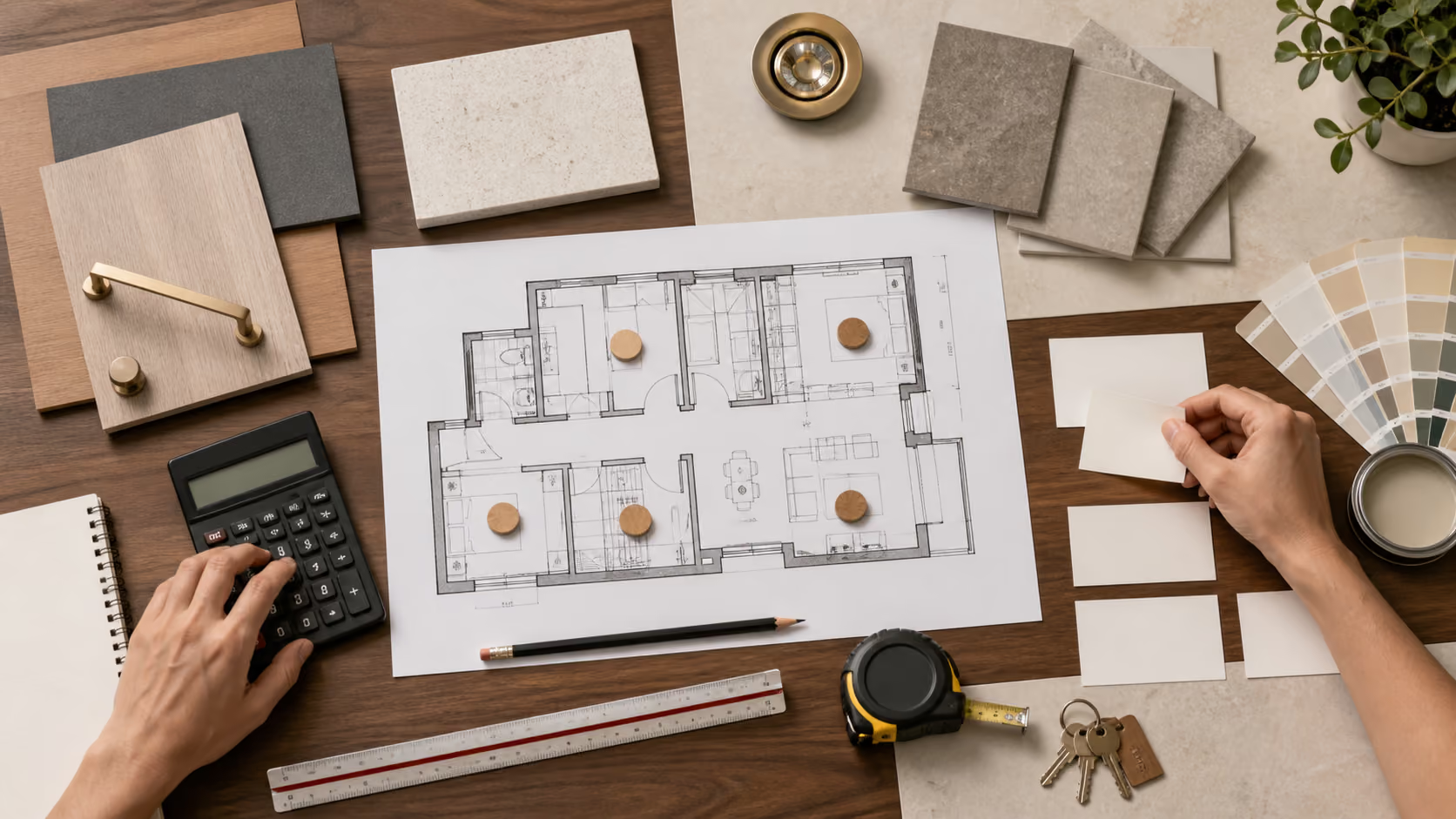
Work through five steps: set a realistic total based on your flat type, condition and how long you'll stay; break it into categories (renovation works, custom carpentry, appliances, furniture and a contingency); decide how you'll fund it from cash and a renovation loan (CPF cannot be used for renovation); get itemised quotations and compare them like-for-like; then protect the budget with a 10–15% contingency and a design confirmed before works begin. Most HDB renovations land between S$35,000 and S$100,000.
Work through five steps: set a realistic total based on your flat type, condition and how long you'll stay; break it into categories (renovation works, custom carpentry, appliances, furniture and a contingency); decide how you'll fund it from cash and a renovation loan (CPF cannot be used for renovation); get itemised quotations and compare them like-for-like; then protect the budget with a 10–15% contingency and a design confirmed before works begin. Most HDB renovations land between S$35,000 and S$100,000.
Reserve 10–15% of your total renovation budget as a contingency. On a S$60,000 renovation, that is roughly S$6,000–S$9,000. It covers surprises like hidden water damage, additional hacking works, or a mid-project material upgrade. If you don't use it, it becomes your first furniture or appliance purchase.
No. CPF savings cannot be used for renovation works. CPF may be used for the property purchase and housing loan, but renovation must be funded through cash or a bank renovation loan. Banks typically lend up to six times your monthly income, capped at around S$30,000, with a tenure of up to five years.
A common split is custom carpentry 30–40%, hacking and flooring 15–25%, kitchen and bathrooms 15–25%, electrical and plumbing 8–12%, painting and lighting 8–12%, and a 10–15% contingency. Keep appliances, furniture and curtains in separate budgets so they don't inflate your renovation figure.
Renovation budgets rarely go wrong because of one expensive decision.
More often, it’s S$800 here, S$1,500 there, an upgraded countertop, additional carpentry, a few more electrical points — and suddenly a S$60,000 renovation is heading towards S$75,000.
That’s why the better question isn’t simply:
“How much does renovation cost in Singapore?”
It’s:
“How should I plan my renovation budget so I can create the home I want without losing control of the cost?”
A good renovation budget gives your designer a realistic framework to work within, helps you decide where to spend more, and leaves enough room for the unexpected.
Here’s how we recommend approaching it.
Want a clearer starting point for your renovation budget? Use Luxior’s renovation cost calculator, then share your flat type, floor plan and priorities on WhatsApp so the planning starts with your actual home rather than a generic figure.
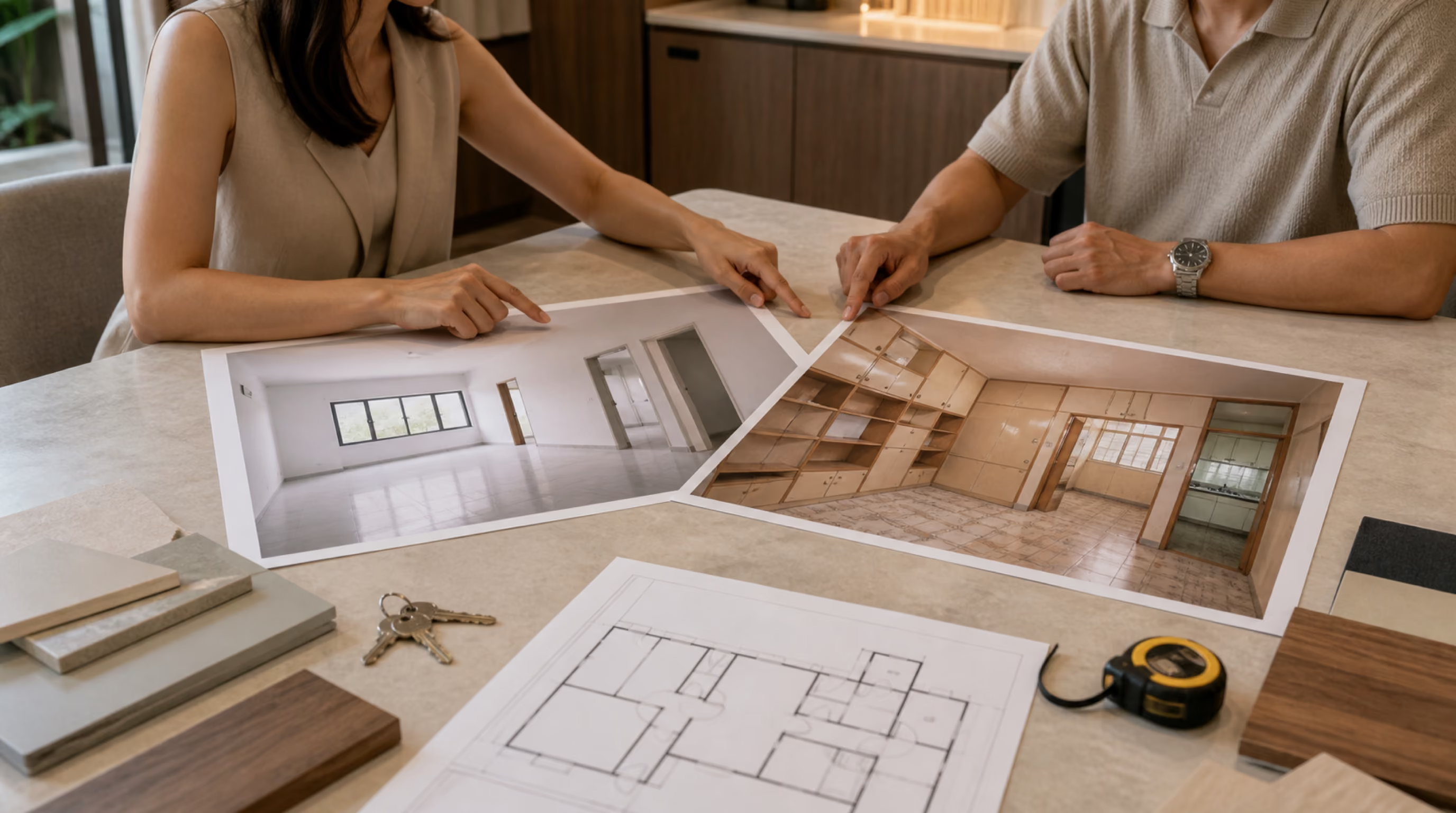
Before deciding whether your renovation budget should be S$40,000, S$70,000 or S$100,000+, look at the home itself.
A new BTO generally gives you a cleaner starting point.
With an older resale property, part of your budget may be spent before the new design even begins. Existing flooring may need hacking, bathrooms may require substantial work, electrical systems may need updating, and old built-ins may need to be removed.
Two similarly sized HDB flats can therefore require very different renovation budgets.
There is a significant difference between keeping the existing flooring and bathrooms, renovating the kitchen with selected carpentry, and stripping the property back to redesign almost everything.
Define your scope before trying to define your final number.
If you’re creating a long-term family home, investing more in workmanship, storage, durable materials and a well-resolved layout can make sense.
If you expect to move again relatively soon, you may want to be more selective about expensive built-in features that you can’t take with you.
Luxior Designer Note: Instead of telling your designer, “My budget is exactly S$60,000,” consider giving a comfortable range — for example, S$55,000–S$65,000. It creates room to prioritise without allowing the project to become open-ended.
A renovation budget shouldn’t be treated as one large pot of money.
Break it down.
For many HDB renovations, custom carpentry can take around 30–40% of the renovation budget. Hacking, masonry, tiling and flooring may account for another 15–25%, while kitchens and bathrooms can also take a significant share.
Electrical work, plumbing, painting, ceilings and lighting need their own allocations, and you should still leave approximately 10–15% as contingency.
These aren’t fixed rules.
A homeowner who wants extensive full-height storage may spend considerably more on carpentry. Someone buying a resale flat requiring extensive hacking and wet works may see more of the budget going into preparation.
The point is to understand where the money is going before construction starts.
Carpentry is one of the easiest places for a renovation budget to grow.
A TV console becomes a full feature wall. A wardrobe becomes a full-height dressing system. Then comes the shoe cabinet, display cabinet, study, kitchen storage, vanity and additional bedroom storage.
Individually, each addition may seem reasonable.
Together, they can completely change the renovation budget.
Ask yourself:
Does this really need to be built in, or could loose furniture do the job just as well?
That single question can save a surprising amount.
Tell us your property type, renovation scope and approximate budget.
We’ll help you understand where it makes sense to invest — and where you may be spending unnecessarily.
No pressure and no endless follow-up calls. Just a conversation about your home.
Once you have a realistic range, connect it to the rooms and priorities that matter most. Compare Luxior’s HDB BTO Interior Design and HDB Resale Interior Design approaches, then explore the Kitchen, Living Room and Custom Carpentry ideas before allocating the budget.
This is where homeowners frequently underestimate their true move-in cost.
Your renovation quotation may not include:
A S$60,000 renovation does not necessarily mean you need S$60,000 to complete your home.
If another S$15,000–S$25,000 is needed for appliances, furniture and move-in expenses, that should be visible from the beginning.
We recommend maintaining two numbers:
Renovation Budget — construction and built-in works.
Total Home Budget — renovation, furniture, appliances and other move-in costs.
That gives you a much clearer picture of what the home will actually cost.
Not every part of your home deserves the same investment.
Think about how difficult something will be to replace later.
Waterproofing, electrical work, plumbing, flooring and major built-in carpentry are disruptive and expensive to redo.
A dining chair isn’t.
A useful rule is:
Spend carefully on what stays. Stay flexible on what can move.
For example, we would generally prioritise a properly planned kitchen over an expensive decorative feature wall if the budget forces a choice.
The feature wall can evolve later.
Moving plumbing or rebuilding a poorly planned kitchen is considerably harder.
If your working renovation budget is S$60,000 and you’ve allocated every dollar before work begins, you don’t really have a S$60,000 budget.
You have a S$60,000 commitment with no room for anything unexpected.
A contingency of approximately 10–15% gives you breathing room for issues discovered during works or changes that genuinely improve the home.
On a S$60,000 renovation, that’s roughly S$6,000–S$9,000.
Possible surprises include:
Most importantly:
Don’t treat your contingency as an upgrade budget.
If you’ve kept S$8,000 aside, don’t immediately spend it because you found a nicer stone.
If nothing goes wrong, you get to keep it.
That’s a good outcome.
These examples aren’t quotations. They’re illustrations of how different priorities can shape a renovation budget.
A homeowner at this level may prioritise functionality and carefully select where customisation matters.
An illustrative allocation might look like:
Custom carpentry: S$16,000
Flooring and tiling: S$7,000
Kitchen and bathrooms: S$9,000
Electrical and plumbing: S$4,000
Painting, ceiling and lighting: S$4,000
Contingency: S$5,000
The goal isn’t to build something everywhere.
It’s to put the budget where it makes the greatest difference.
With resale properties, more money may need to go into removing and replacing what already exists.
For example:
Hacking and disposal: S$8,000
Custom carpentry: S$24,000
Flooring and tiling: S$11,000
Kitchen and bathrooms: S$14,000
Electrical and plumbing: S$6,000
Painting, ceiling and lighting: S$7,000
The important difference isn’t simply that the home is bigger.
Part of the budget is being spent on creating a suitable foundation for the new interior.
Above S$100,000, the question shouldn’t simply become:
“What else can we add?”
A larger budget should buy better resolution, not unnecessary complexity.
That could mean:
A premium home doesn’t need to look expensive everywhere.
Often, the difference is in the details you don’t immediately notice — alignment, proportions, transitions, lighting, material junctions and how naturally the home works around everyday life.
More budget should create a better home, not simply more things inside it.
Suppose Designer A quotes S$58,000 and Designer B quotes S$72,000.
That doesn’t automatically mean Designer A is S$14,000 cheaper.
You need to know whether they’re quoting the same thing.
What exactly is being built, removed or replaced?
What laminate, countertop, tiles, hardware and fittings have been allowed for?
How much carpentry is included? How many electrical points? How much tiling?
What will you need to pay for separately later?
Who coordinates the contractors, site and schedule?
What happens after handover?
The bottom number only becomes meaningful once the scope is comparable.
A cheaper quotation with significant omissions can eventually become the more expensive renovation.
One of the most effective ways to protect your budget is surprisingly simple:
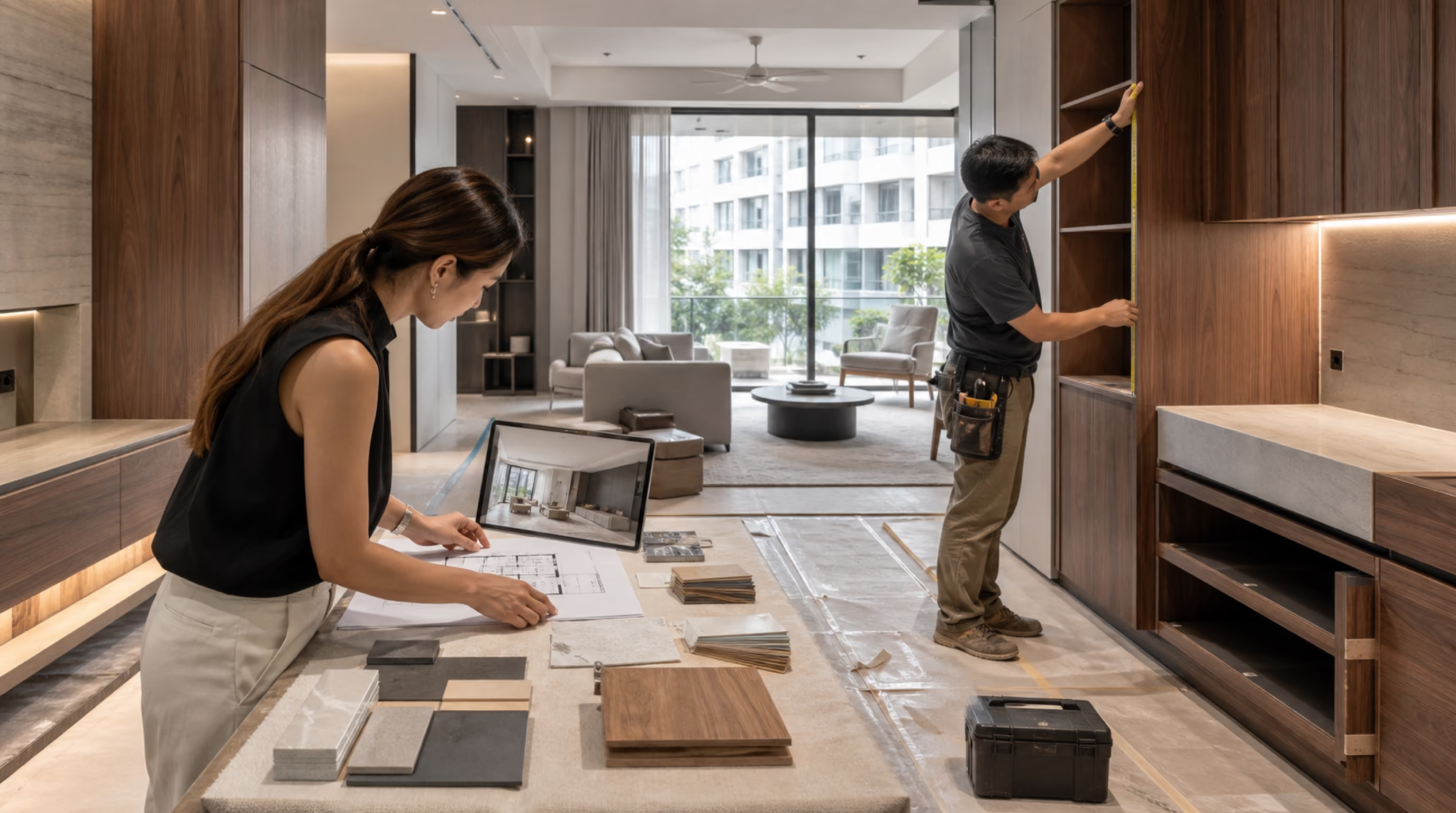
Make more decisions before work begins.
Moving an electrical point on a drawing is easy.
Moving it after the wall has been completed isn’t.
Changing a laminate during design is easy.
Changing completed carpentry isn’t.
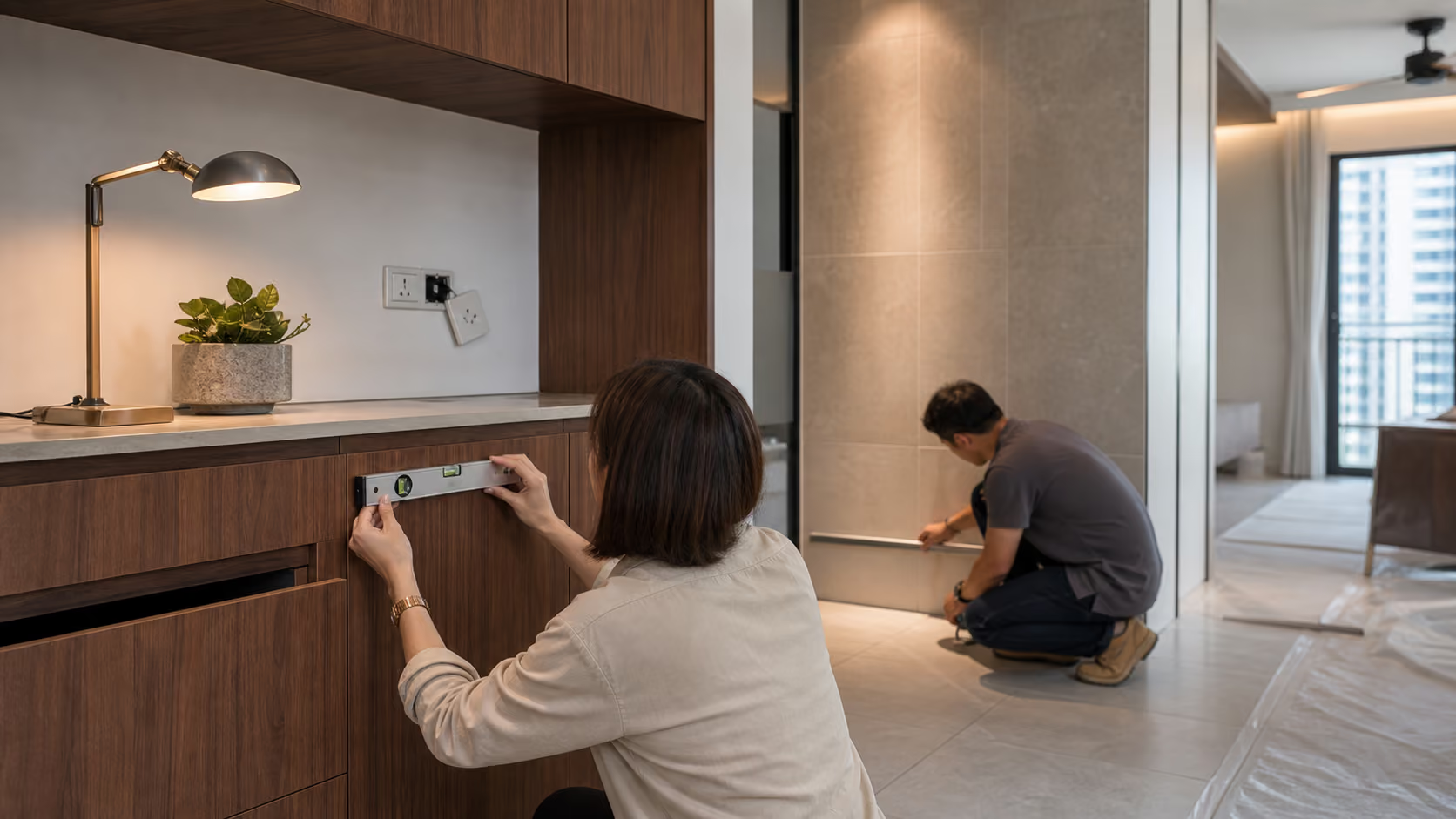
The more thoroughly the layout, materials, storage, lighting and major details are resolved beforehand, the fewer expensive decisions need to happen on site.
Good design planning doesn’t only affect how your home looks.
It protects the renovation budget.
Many Singapore homeowners use a combination of savings and renovation financing.
If you’re paying primarily from savings, avoid using every dollar you have for the renovation. Your emergency savings should remain separate from your home budget.
If you’re considering a renovation loan, compare current offers carefully rather than relying on an old headline interest rate or borrowing limit.
Loan products, eligibility requirements and interest rates change.
CPF savings generally cannot be used to pay for renovation works, so your renovation cash flow needs to be planned separately from your property purchase.
Always check the latest CPF and financing requirements before making a financial decision.
Before finalising your budget, check whether you’ve accounted for:
If these aren’t inside your renovation quotation, they still need to come from somewhere.
Before committing to a renovation package, make sure you can answer yes to the following:
If you can answer yes to these questions, you’re already approaching your renovation with a much clearer financial plan.
The best renovation budget isn’t necessarily the biggest one.
It’s the one that reflects how you actually live.
Spend on the things you use every day. Invest in elements that are difficult to replace. Be selective about purely decorative additions. Keep room for the unexpected.
Most importantly, design the home around the budget rather than designing a dream first and trying to force the numbers to fit later.
At Luxior Concept, we approach renovation as both a design problem and an investment decision.
We want every part of the budget to have a reason for being there.
Tell us about your home, your priorities and the budget you’re comfortable with.
We’ll help you explore what’s realistic — and how to make the most of it.
Plan My Renovation Budget →
No pressure. No endless calls. Just a conversation about your home.
Design Beyond Standards.
A structured budget does three things a single figure can’t: it sets realistic expectations before you fall for ideas you can’t afford, it speeds up decisions once you know your limits, and it stops small “just a little more” choices from quietly adding thousands to your final bill. Treat your budget like a financial plan, not a wish list — decide what you can spend first, then design within it. For an initial planning range, use Luxior’s renovation cost calculator before speaking with designers or contractors.




.avif)