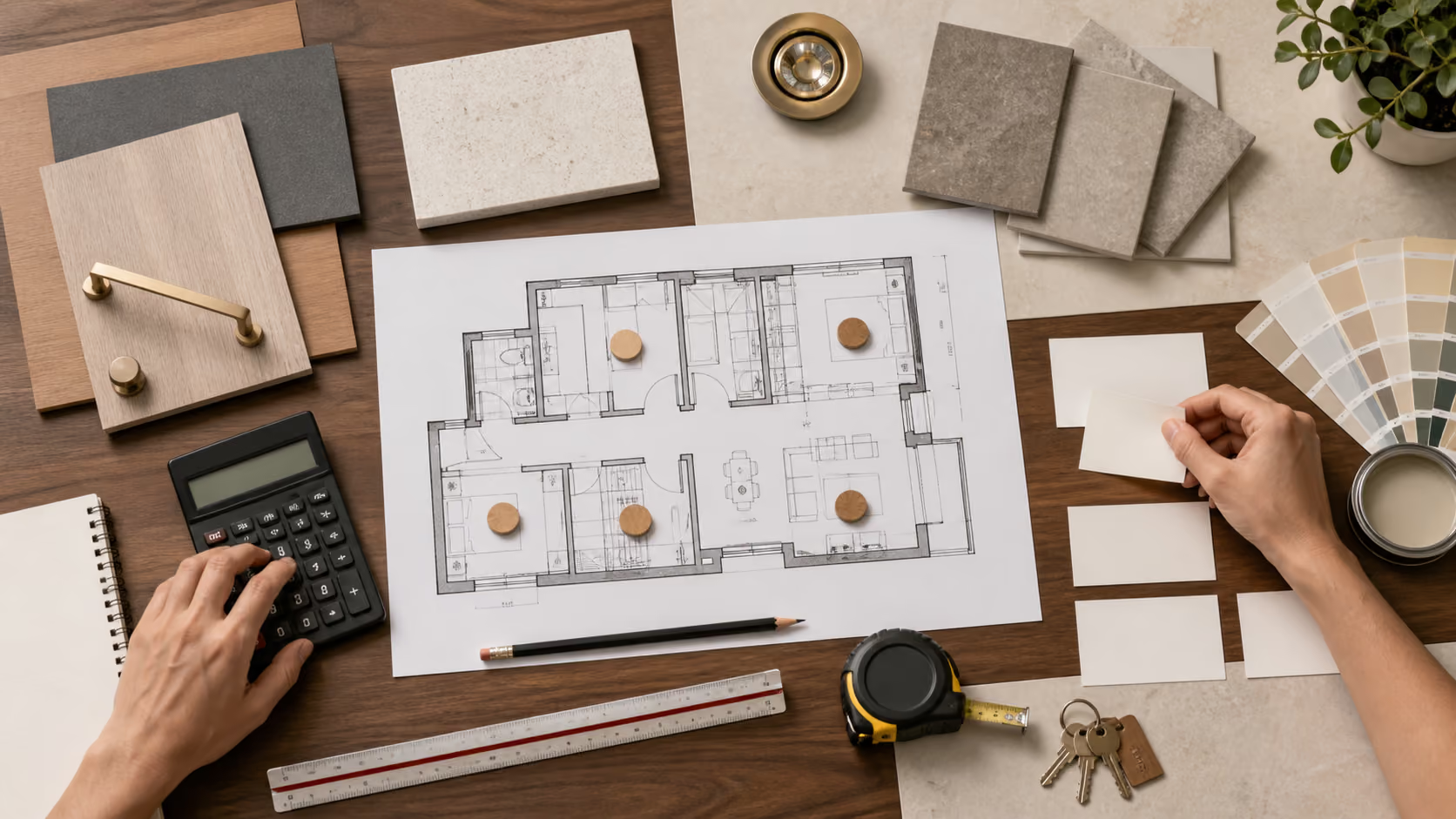
Property Type & Space Planning
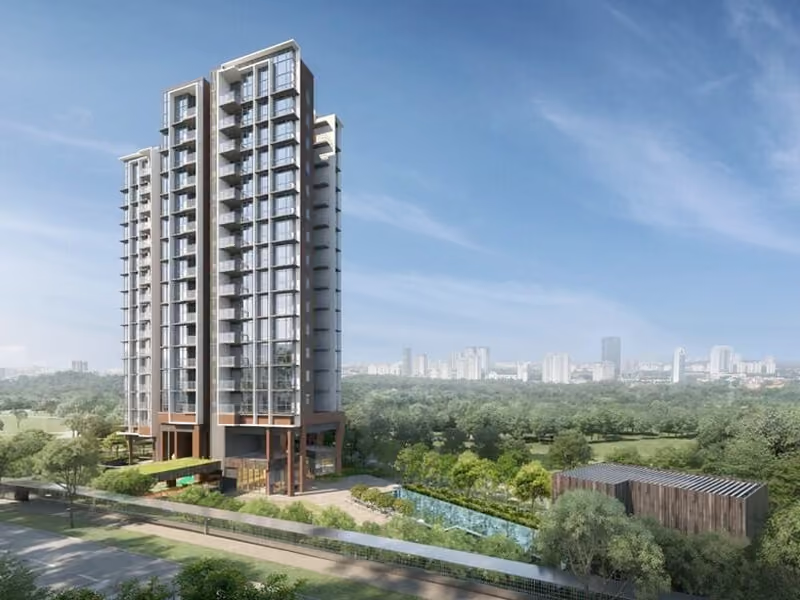
UrbanVille @ Woodlands Renovation
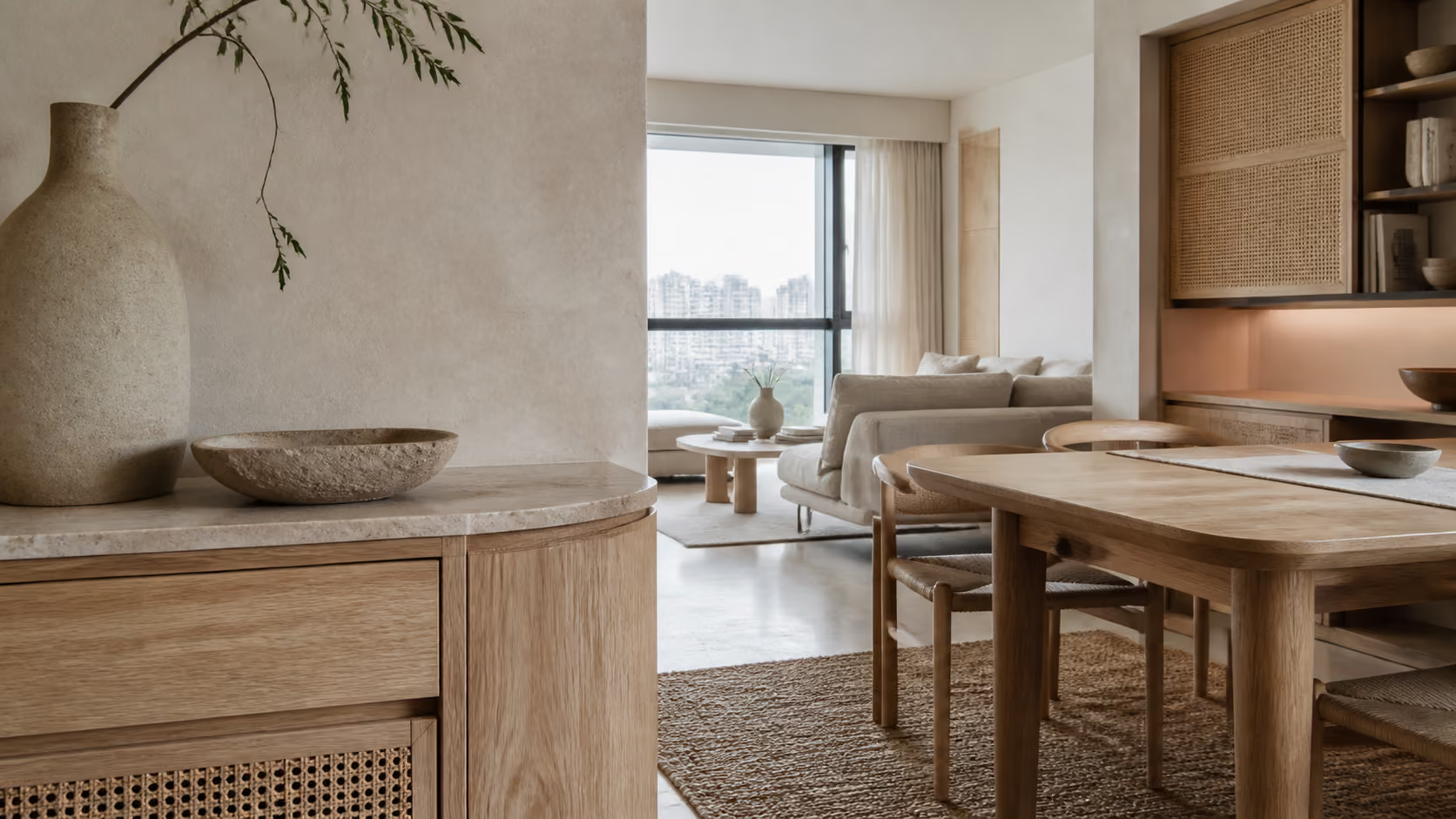
The best natural materials are timber (especially engineered wood and veneers suited to humidity), natural and engineered stone such as travertine, marble and sintered stone, clay and ceramic, natural textiles like linen, cotton and wool, and woven fibres like rattan, cane and bamboo. Together they bring warmth, texture and a grounded, tactile calm. Because Singapore is humid, favour moisture-resilient forms so the interior stays beautiful and durable.
The best natural materials are timber (especially engineered wood and veneers suited to humidity), natural and engineered stone such as travertine, marble and sintered stone, clay and ceramic, natural textiles like linen, cotton and wool, and woven fibres like rattan, cane and bamboo. Together they bring warmth, texture and a grounded, tactile calm. Because Singapore is humid, favour moisture-resilient forms so the interior stays beautiful and durable.
Yes, provided you choose the right form of each material. Engineered timber, sealed or engineered stone, ceramic and porcelain, and well-ventilated natural fibres all perform beautifully in Singapore. The key is matching each material to its location and giving moisture-sensitive materials proper sealing and airflow.
Engineered wood is usually better for flooring and large carpentry in Singapore because it resists the warping that high humidity can cause in solid timber. It has a real wood veneer over a stable core, giving the authentic look with far better dimensional stability. Solid wood is best reserved for smaller feature pieces and furniture.
Ceramic and porcelain tiles, engineered stone, and properly sealed natural stone or microcement are the best choices for bathrooms and kitchens. They resist water and are easy to maintain in humid, high-use spaces, while porous materials like terracotta and marble need careful sealing if used there.
Natural materials can make a home feel warmer, calmer and more inviting. But choosing them for a Singapore interior involves more than finding the right colour or texture.
Humidity, direct sunlight, ventilation, everyday wear and air-conditioning patterns can all affect how materials perform over time. A finish that looks beautiful in a showroom may require careful sealing, positioning or maintenance once installed in a real home.
This guide explains where timber, natural stone, rattan and textured finishes work best—and when an engineered alternative may be the more practical choice.
Direct answer: Engineered timber, properly specified natural stone and rattan kept away from harsh sunlight can all work well in Singapore homes. Microcement and textured plaster can provide a similarly organic appearance, although they are applied finishes rather than natural materials. The right choice depends on the room, installation method and amount of maintenance you are comfortable with.
Key takeaway: Do not choose one material for the entire home simply because you like its appearance. Match each surface to the room’s moisture, sunlight, traffic and cleaning requirements.
Singapore’s warm, humid climate influences how interior materials age.
Timber naturally responds to changes in moisture. Depending on the species, construction and installation, this movement can eventually cause gaps, swelling or cupping.
Natural stone varies in porosity. Some varieties can absorb moisture, oils or coloured liquids if they are not protected with an appropriate sealer.
Rattan and other plant-based fibres can also be affected by prolonged sunlight, moisture and insufficient ventilation.
Air-conditioning introduces another consideration. A room that is cooled regularly may experience different humidity conditions from a bathroom, service yard or occasionally used bedroom. Because conditions vary throughout the same property, material decisions should be made room by room.
This does not mean natural materials are unsuitable for Singapore. It means the product, finish, installation and maintenance plan all need to work together.
Timber introduces natural grain, visual warmth and a tactile quality that is difficult to reproduce exactly with synthetic surfaces.
Solid timber is made from a single piece of wood. Its appearance can become richer with age, and some products can be sanded and refinished several times.
However, solid timber naturally expands and contracts as moisture conditions change. Its suitability therefore depends on the timber species, board dimensions, subfloor, acclimatisation, installation method and indoor environment.
It can work well in selected applications, but it generally requires more careful specification than engineered timber—particularly across large floor areas.
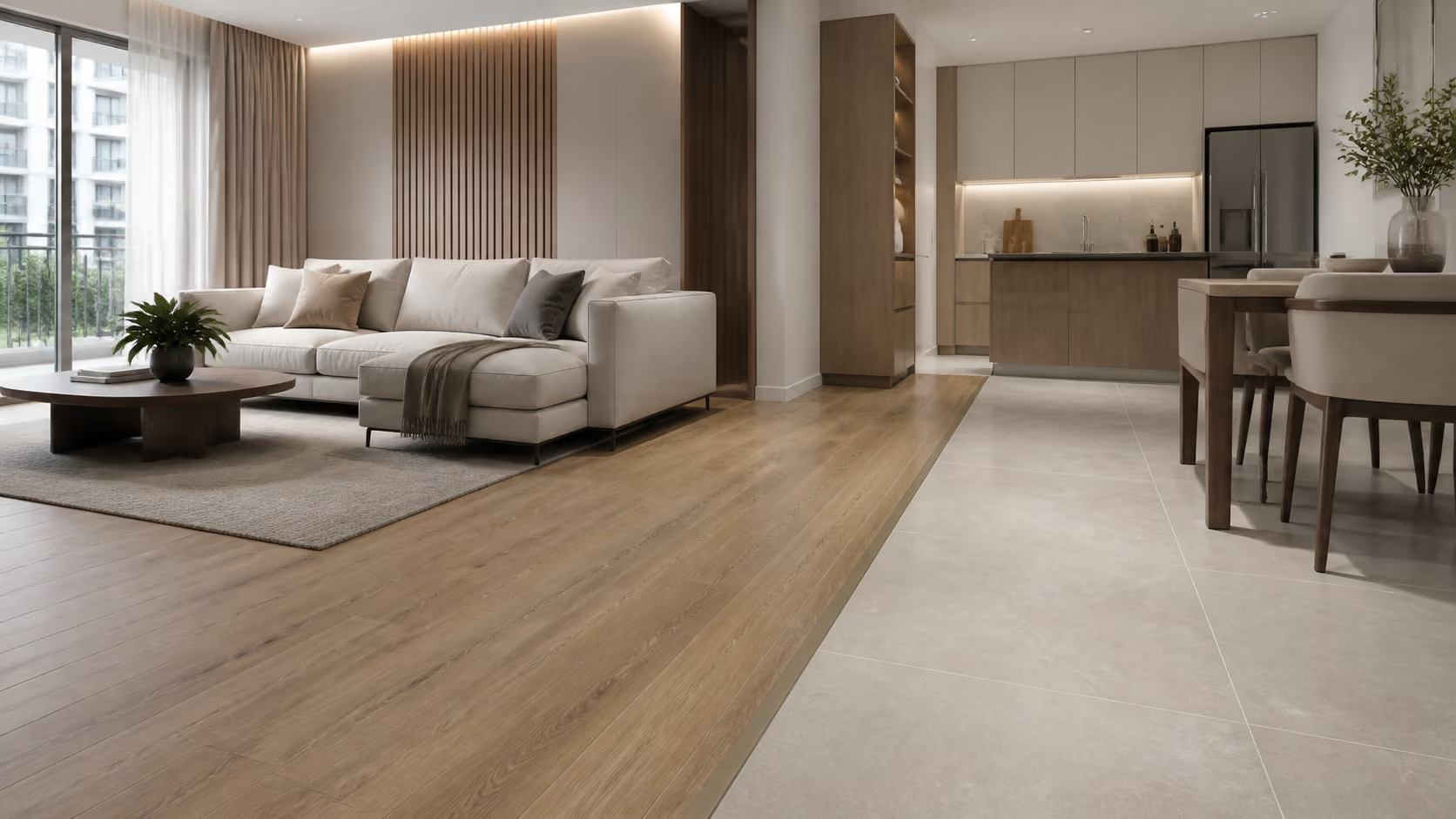
Engineered timber typically combines a real timber surface with a layered core designed to improve dimensional stability.
It retains the appearance of natural wood while generally reacting less dramatically to changes in humidity than an equivalent solid board. This often makes it a more practical option for living rooms, bedrooms and studies in Singapore homes.
Engineered timber is still a wood-based product. Standing water, persistent moisture and unsuitable cleaning products can damage it, so it should not be treated as waterproof.
Timber is generally most suitable for:
For kitchens, bathrooms and other moisture-prone spaces, consider whether a timber-look tile, high-pressure laminate or another engineered surface would provide the desired warmth with easier upkeep.
Send Luxior Concept your floor plan and tell us which rooms you are planning. We can help you compare timber with practical alternatives based on your layout, lifestyle and budget.
Ask About Flooring on WhatsApp →
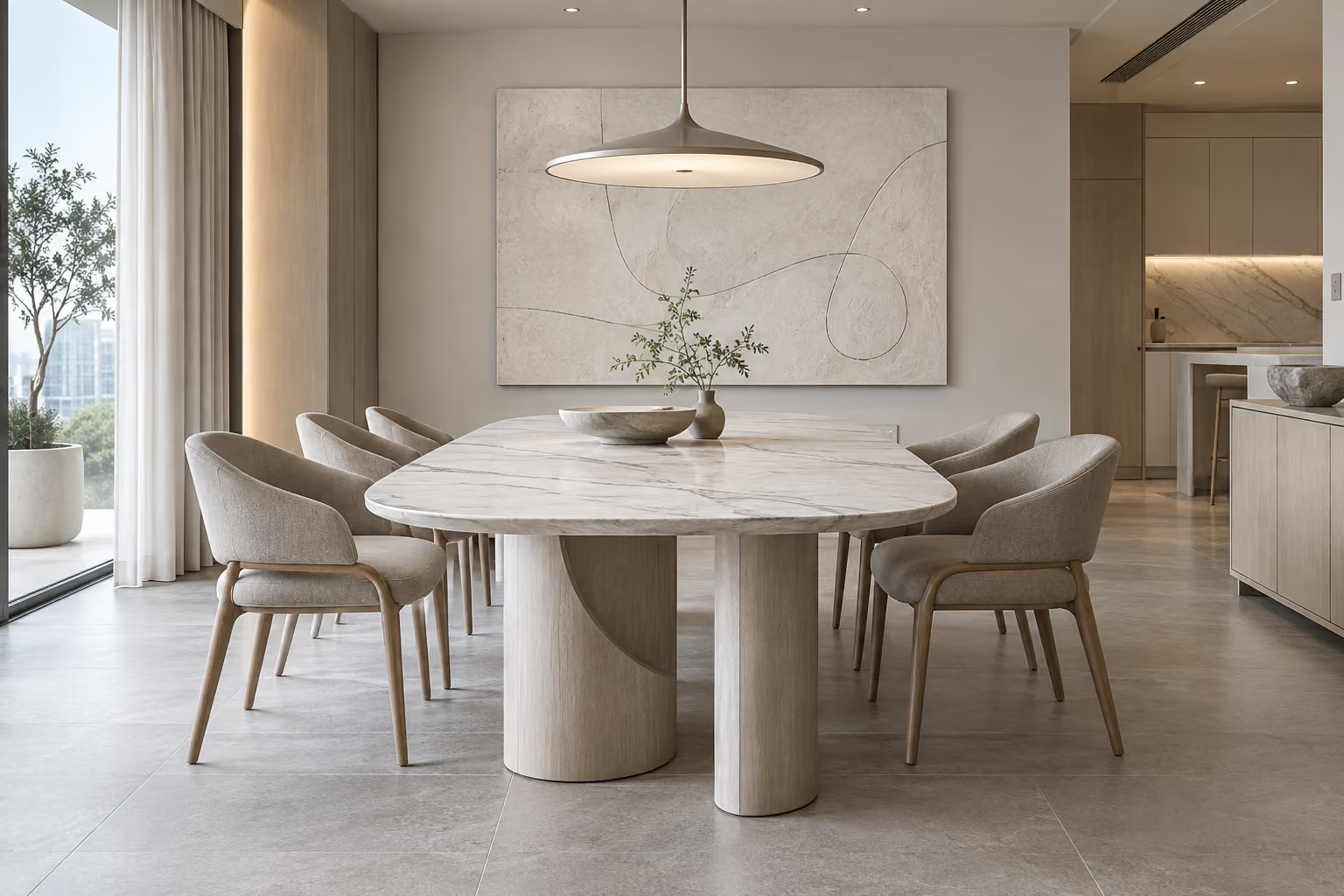
Every piece of natural stone is unique. Its colour, veining and tonal variation can introduce character that manufactured surfaces are designed to approximate but cannot reproduce exactly.
That natural variation also means different stones—and even different slabs of the same type—can behave differently.
Marble is valued for its distinctive veining and refined appearance. It can work particularly well on feature walls, vanity counters and selected kitchen features.
It may, however, be vulnerable to staining, scratching or etching from acidic substances. Its suitability depends on the particular stone, finish, location and homeowner’s expectations.
A honed surface may make minor wear less visually prominent than a highly polished one, but the final specification should be discussed with the supplier and installer.
Granite is commonly considered for worktops because many varieties offer good resistance to everyday wear. Its colour, composition and porosity still vary, so the particular slab should be assessed rather than relying solely on the material name.
Sintered stone is an engineered surface—not a natural stone.
It can provide a stone-inspired appearance with strong resistance to common household stains, heat and daily use. Product characteristics vary by manufacturer, so specifications and care instructions should still be checked.
For homeowners who want a low-maintenance work surface, sintered stone may be a practical alternative to marble or other natural stones.
Rattan, cane and woven natural fibres can soften hard architectural surfaces and introduce a light, tropical quality to an interior.
They are particularly effective as accents: cabinet inserts, loose furniture, decorative lighting or selected feature panels. Using them selectively can add texture without creating an excessive maintenance burden.
Placement is important. Prolonged exposure to strong sunlight can fade or dry some natural fibres, while consistently damp or poorly ventilated conditions may encourage deterioration.
Rattan is therefore better suited to ventilated indoor spaces and sheltered areas than to balconies exposed directly to rain and afternoon sun.
Use curtains, blinds or solar-control measures where strong sunlight falls directly on the material for extended periods.
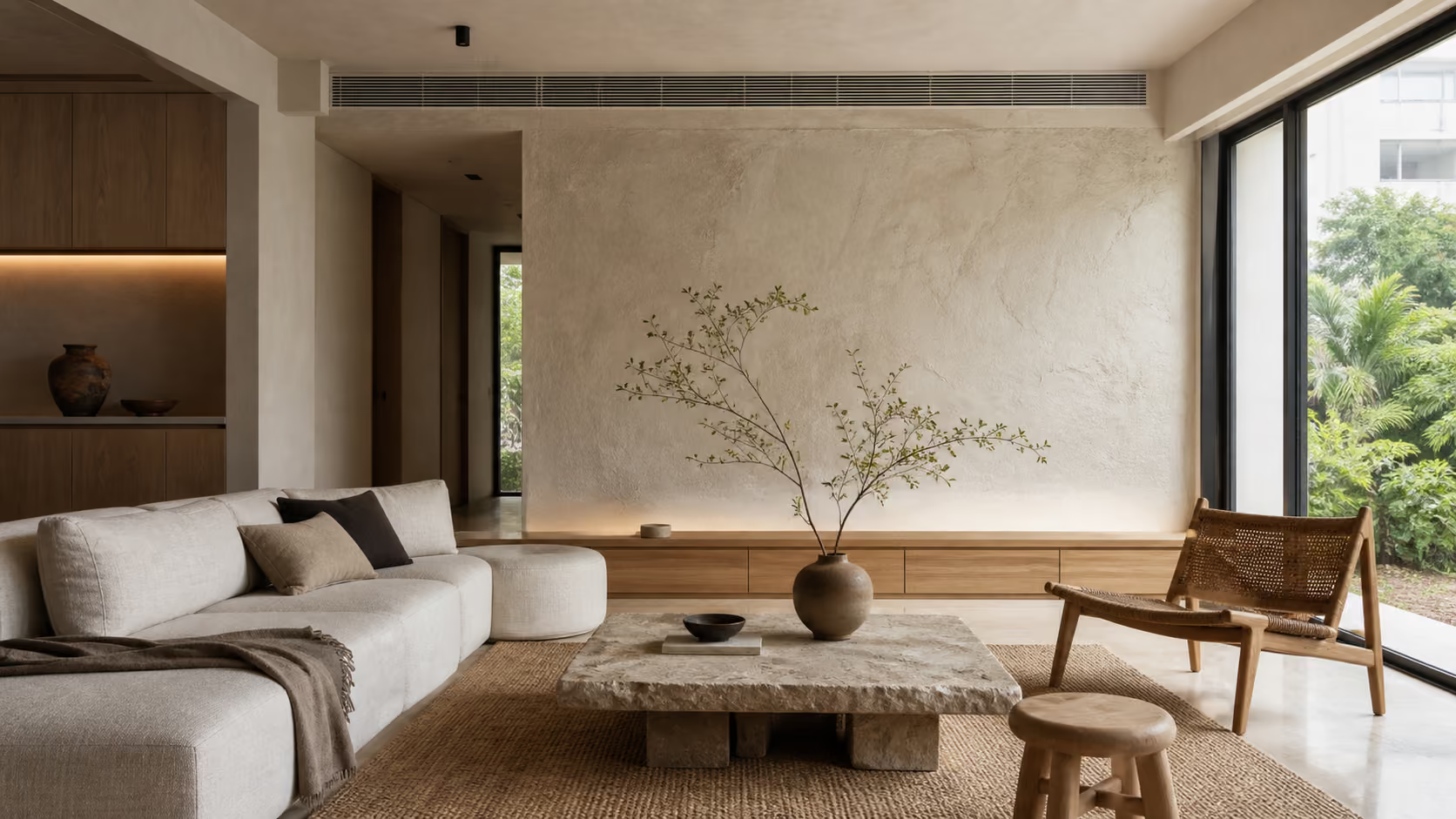
Microcement, lime plaster and similar applied finishes are often grouped with natural materials because of their soft variation and tactile appearance. They are not necessarily natural in the same sense as timber, rattan or quarried stone.
Their ingredients, coating systems and performance vary considerably by product.
Microcement can create a continuous surface with minimal visible joints. It is used for feature walls, selected floors and, with the correct complete system, certain wet-area applications.
Its performance depends heavily on substrate preparation, waterproofing where required, application quality and the protective topcoat. It should not be assumed that every microcement product is suitable for every bathroom or floor.
Textured plaster can create gentle tonal movement without relying on printed patterns. Depending on the product, it may be most appropriate for dry feature walls rather than high-contact or constantly wet surfaces.
Before choosing either finish, ask to see a completed installation—not only a small sample board. The visual result can change significantly across a large wall under natural and artificial light.
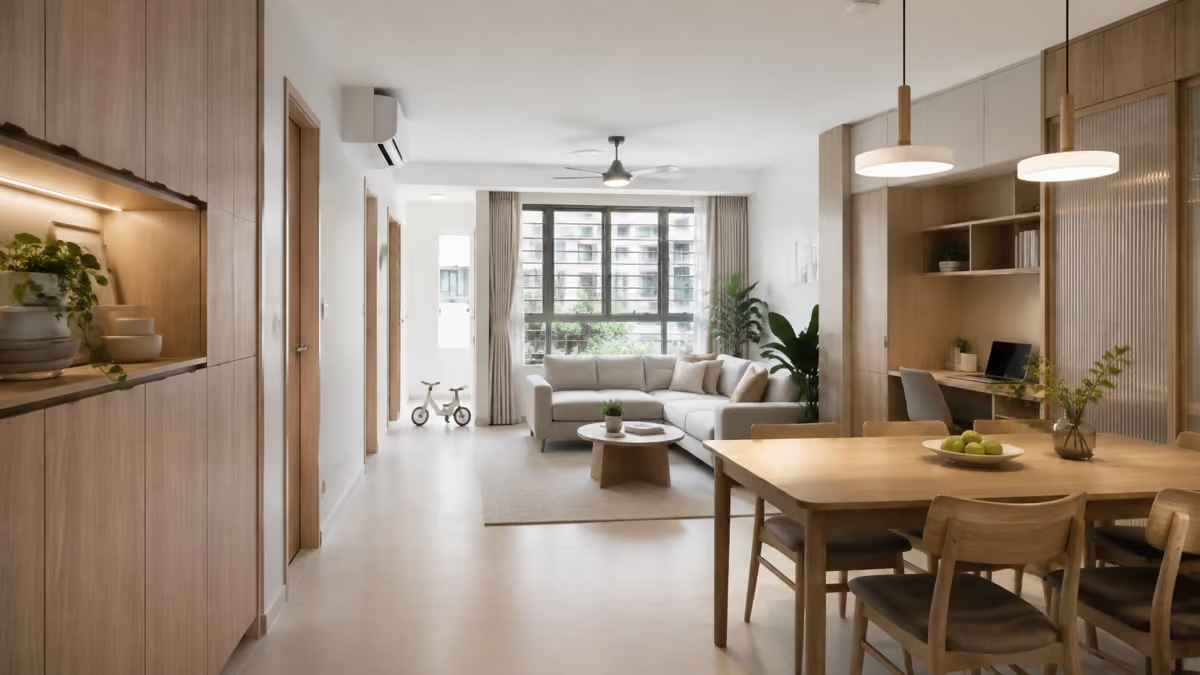
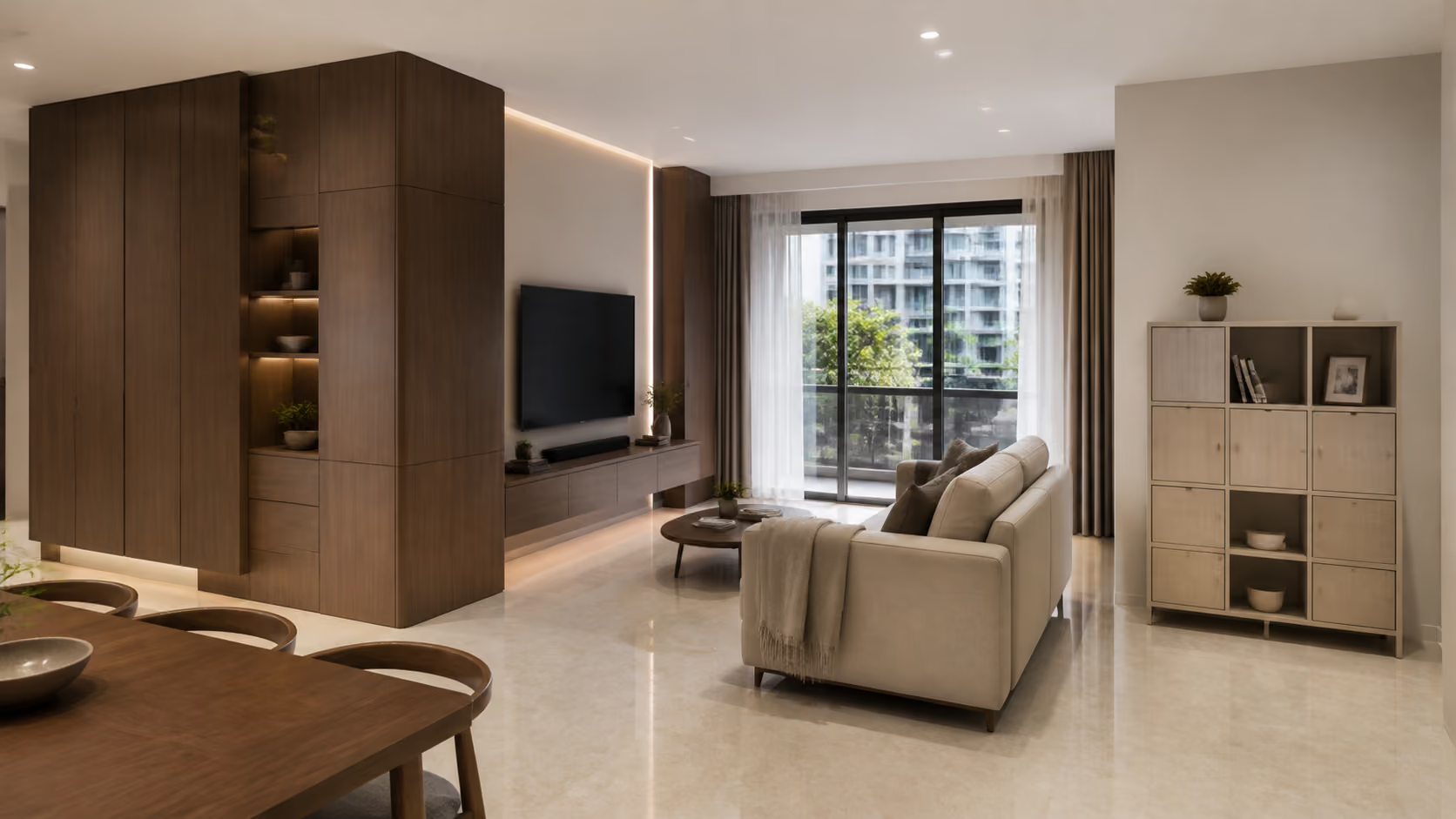
A living room can accommodate more natural texture than most other areas because it is usually protected from direct water exposure.
Potential combinations include:
Consider where direct sunlight enters the room before positioning timber furniture or woven fibres.
Kitchen materials must tolerate spills, heat, cleaning and frequent physical contact.
Natural stone can provide a distinctive focal point, but the exact variety must suit the intended use. An engineered surface such as sintered stone may be preferable for homeowners who prioritise easier daily care.
Timber tones can still be introduced through cabinetry finishes, shelving or furniture without using natural timber on the primary worktop.
Bathrooms require materials, waterproofing and finishes designed for regular moisture exposure.
Suitable possibilities may include:
The decorative surface should never be considered separately from the substrate, waterproofing, joints, drainage and ventilation behind it.
Bedrooms are well suited to softer natural details, including:
If the room receives strong afternoon sun, consider how ultraviolet exposure may affect finishes and fabrics over time.
Outdoor-facing areas require products specifically rated for their level of exposure.
An enclosed or sheltered balcony may accommodate suitable natural-fibre furniture, but an exposed balcony receives rain, sunlight and substantial humidity. Outdoor-rated engineered materials are often more dependable in these conditions.
Share your property type, household needs and approximate renovation budget. Luxior Concept can help you narrow the options before you commit to a material specification.
Get Material Suggestions on WhatsApp →
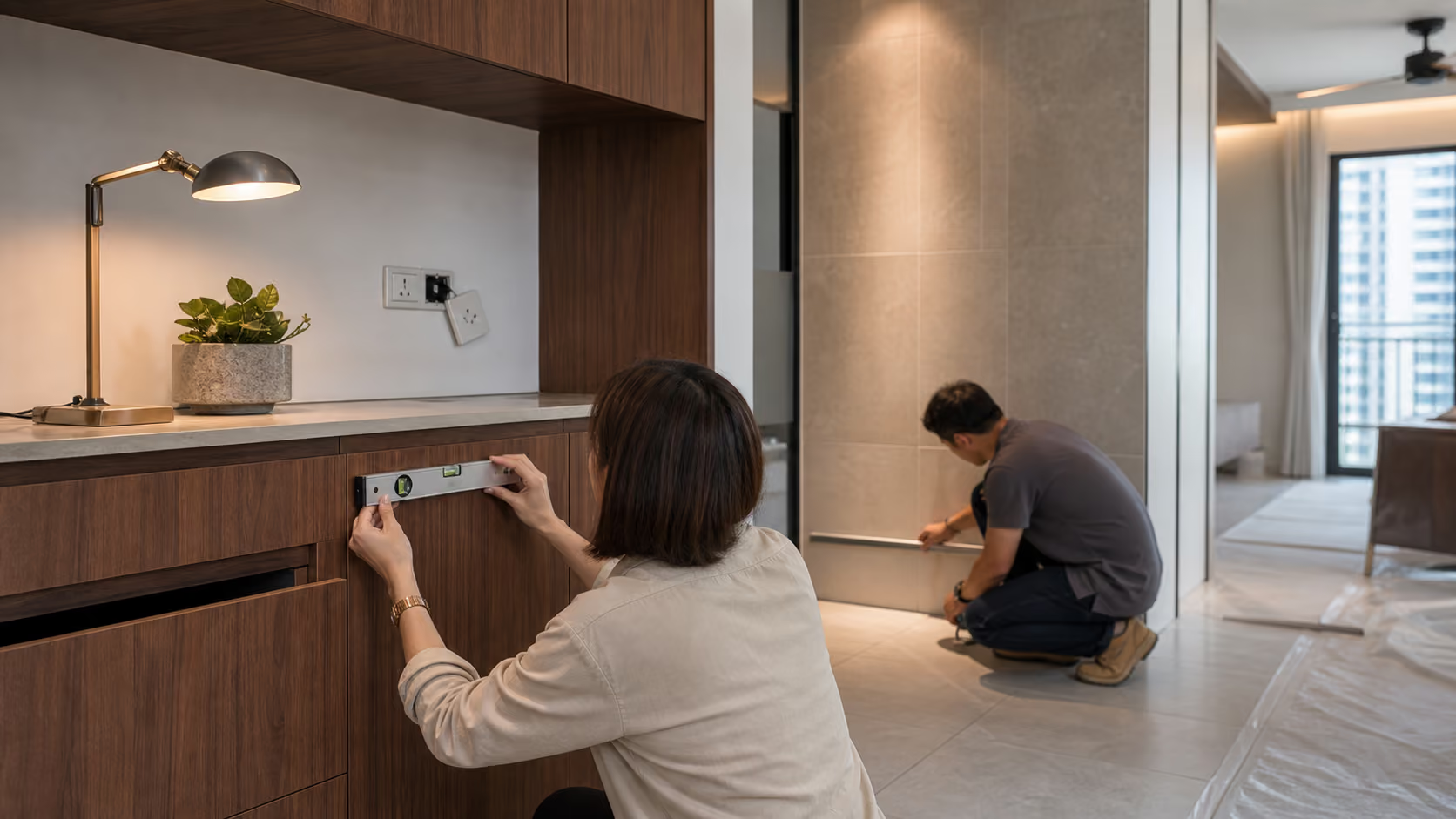
A cabinet’s visible finish is only part of its construction. The internal substrate, edge treatment, hardware and installation details also influence how the completed carpentry performs.
For example, a natural-looking cabinet may use veneer, laminate or another decorative surface over a plywood or engineered-board substrate. These options can look similar from a distance but differ in texture, repairability, consistency, cost and maintenance.
When reviewing a carpentry proposal, ask for the complete material specification rather than accepting a broad description such as “wood finish.”Introduction
Natural materials can make a home feel warmer, calmer and more inviting. But choosing them for a Singapore interior involves more than finding the right colour or texture.
Humidity, direct sunlight, ventilation, everyday wear and air-conditioning patterns can all affect how materials perform over time. A finish that looks beautiful in a showroom may require careful sealing, positioning or maintenance once installed in a real home.
This guide explains where timber, natural stone, rattan and textured finishes work best—and when an engineered alternative may be the more practical choice.
Direct answer: Engineered timber, properly specified natural stone and rattan kept away from harsh sunlight can all work well in Singapore homes. Microcement and textured plaster can provide a similarly organic appearance, although they are applied finishes rather than natural materials. The right choice depends on the room, installation method and amount of maintenance you are comfortable with.
Key takeaway: Do not choose one material for the entire home simply because you like its appearance. Match each surface to the room’s moisture, sunlight, traffic and cleaning requirements.
Singapore’s warm, humid climate influences how interior materials age.
Timber naturally responds to changes in moisture. Depending on the species, construction and installation, this movement can eventually cause gaps, swelling or cupping.
Natural stone varies in porosity. Some varieties can absorb moisture, oils or coloured liquids if they are not protected with an appropriate sealer.
Rattan and other plant-based fibres can also be affected by prolonged sunlight, moisture and insufficient ventilation.
Air-conditioning introduces another consideration. A room that is cooled regularly may experience different humidity conditions from a bathroom, service yard or occasionally used bedroom. Because conditions vary throughout the same property, material decisions should be made room by room.
This does not mean natural materials are unsuitable for Singapore. It means the product, finish, installation and maintenance plan all need to work together.
Timber introduces natural grain, visual warmth and a tactile quality that is difficult to reproduce exactly with synthetic surfaces.
Solid timber is made from a single piece of wood. Its appearance can become richer with age, and some products can be sanded and refinished several times.
However, solid timber naturally expands and contracts as moisture conditions change. Its suitability therefore depends on the timber species, board dimensions, subfloor, acclimatisation, installation method and indoor environment.
It can work well in selected applications, but it generally requires more careful specification than engineered timber—particularly across large floor areas.
Engineered timber typically combines a real timber surface with a layered core designed to improve dimensional stability.
It retains the appearance of natural wood while generally reacting less dramatically to changes in humidity than an equivalent solid board. This often makes it a more practical option for living rooms, bedrooms and studies in Singapore homes.
Engineered timber is still a wood-based product. Standing water, persistent moisture and unsuitable cleaning products can damage it, so it should not be treated as waterproof.
Timber is generally most suitable for:
For kitchens, bathrooms and other moisture-prone spaces, consider whether a timber-look tile, high-pressure laminate or another engineered surface would provide the desired warmth with easier upkeep.
Send Luxior Concept your floor plan and tell us which rooms you are planning. We can help you compare timber with practical alternatives based on your layout, lifestyle and budget.
Ask About Flooring on WhatsApp →
Every piece of natural stone is unique. Its colour, veining and tonal variation can introduce character that manufactured surfaces are designed to approximate but cannot reproduce exactly.
That natural variation also means different stones—and even different slabs of the same type—can behave differently.
Marble is valued for its distinctive veining and refined appearance. It can work particularly well on feature walls, vanity counters and selected kitchen features.
It may, however, be vulnerable to staining, scratching or etching from acidic substances. Its suitability depends on the particular stone, finish, location and homeowner’s expectations.
A honed surface may make minor wear less visually prominent than a highly polished one, but the final specification should be discussed with the supplier and installer.
Granite is commonly considered for worktops because many varieties offer good resistance to everyday wear. Its colour, composition and porosity still vary, so the particular slab should be assessed rather than relying solely on the material name.
Sintered stone is an engineered surface—not a natural stone.
It can provide a stone-inspired appearance with strong resistance to common household stains, heat and daily use. Product characteristics vary by manufacturer, so specifications and care instructions should still be checked.
For homeowners who want a low-maintenance work surface, sintered stone may be a practical alternative to marble or other natural stones.
Rattan, cane and woven natural fibres can soften hard architectural surfaces and introduce a light, tropical quality to an interior.
They are particularly effective as accents: cabinet inserts, loose furniture, decorative lighting or selected feature panels. Using them selectively can add texture without creating an excessive maintenance burden.
Placement is important. Prolonged exposure to strong sunlight can fade or dry some natural fibres, while consistently damp or poorly ventilated conditions may encourage deterioration.
Rattan is therefore better suited to ventilated indoor spaces and sheltered areas than to balconies exposed directly to rain and afternoon sun.
Use curtains, blinds or solar-control measures where strong sunlight falls directly on the material for extended periods.
Microcement, lime plaster and similar applied finishes are often grouped with natural materials because of their soft variation and tactile appearance. They are not necessarily natural in the same sense as timber, rattan or quarried stone.
Their ingredients, coating systems and performance vary considerably by product.
Microcement can create a continuous surface with minimal visible joints. It is used for feature walls, selected floors and, with the correct complete system, certain wet-area applications.
Its performance depends heavily on substrate preparation, waterproofing where required, application quality and the protective topcoat. It should not be assumed that every microcement product is suitable for every bathroom or floor.
Textured plaster can create gentle tonal movement without relying on printed patterns. Depending on the product, it may be most appropriate for dry feature walls rather than high-contact or constantly wet surfaces.
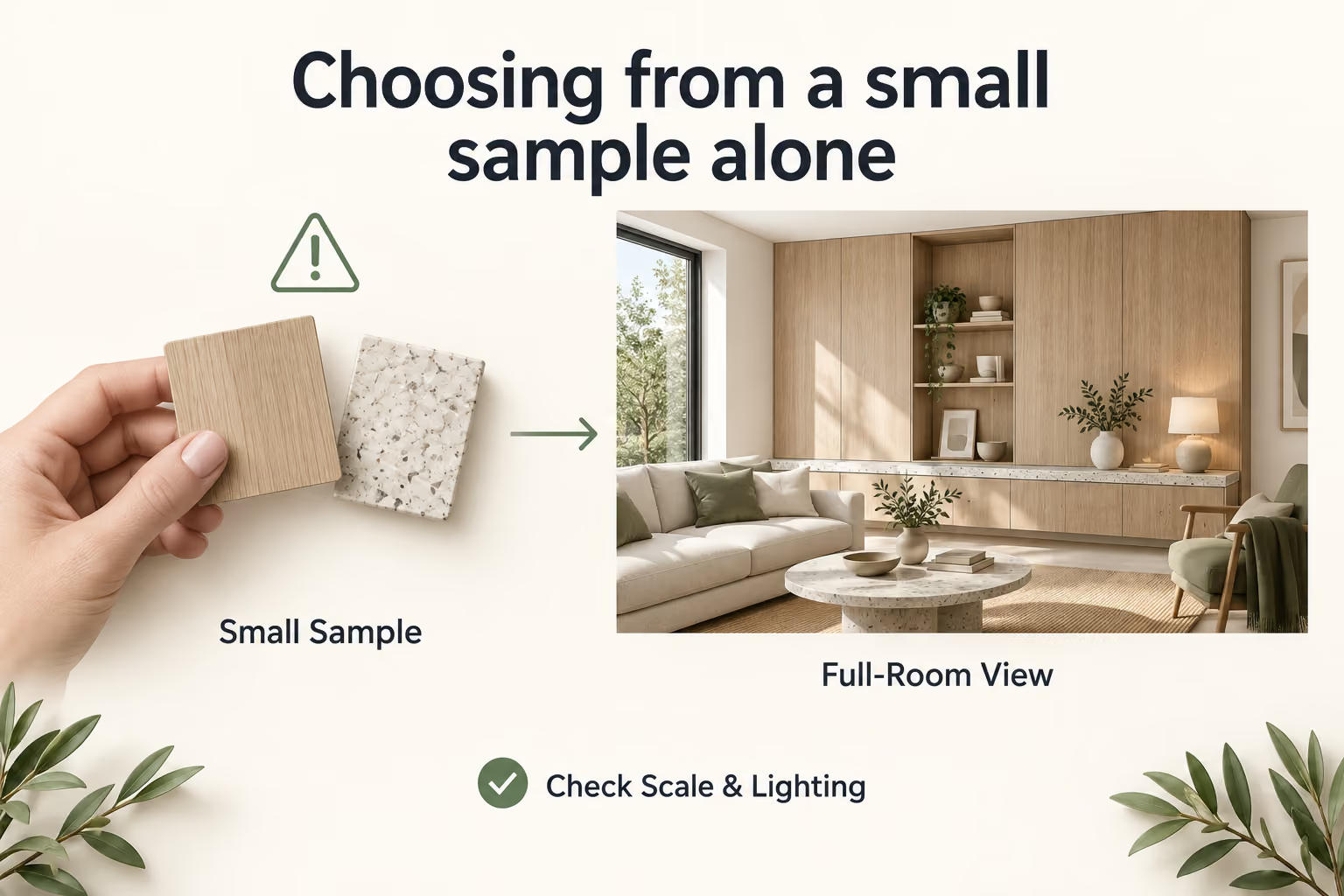
Before choosing either finish, ask to see a completed installation—not only a small sample board. The visual result can change significantly across a large wall under natural and artificial light.
Natural materials work best when the wider design language is clear. If you are weighing calm, tactile finishes, compare our Wabi-Sabi vs Japandi guide and interior design style guide before selecting materials.
Choose the material for the room, not just the showroom. Explore our Living Room, Kitchen, Bathroom and Master Bedroom ideas to see where warmth, durability and maintenance matter most.
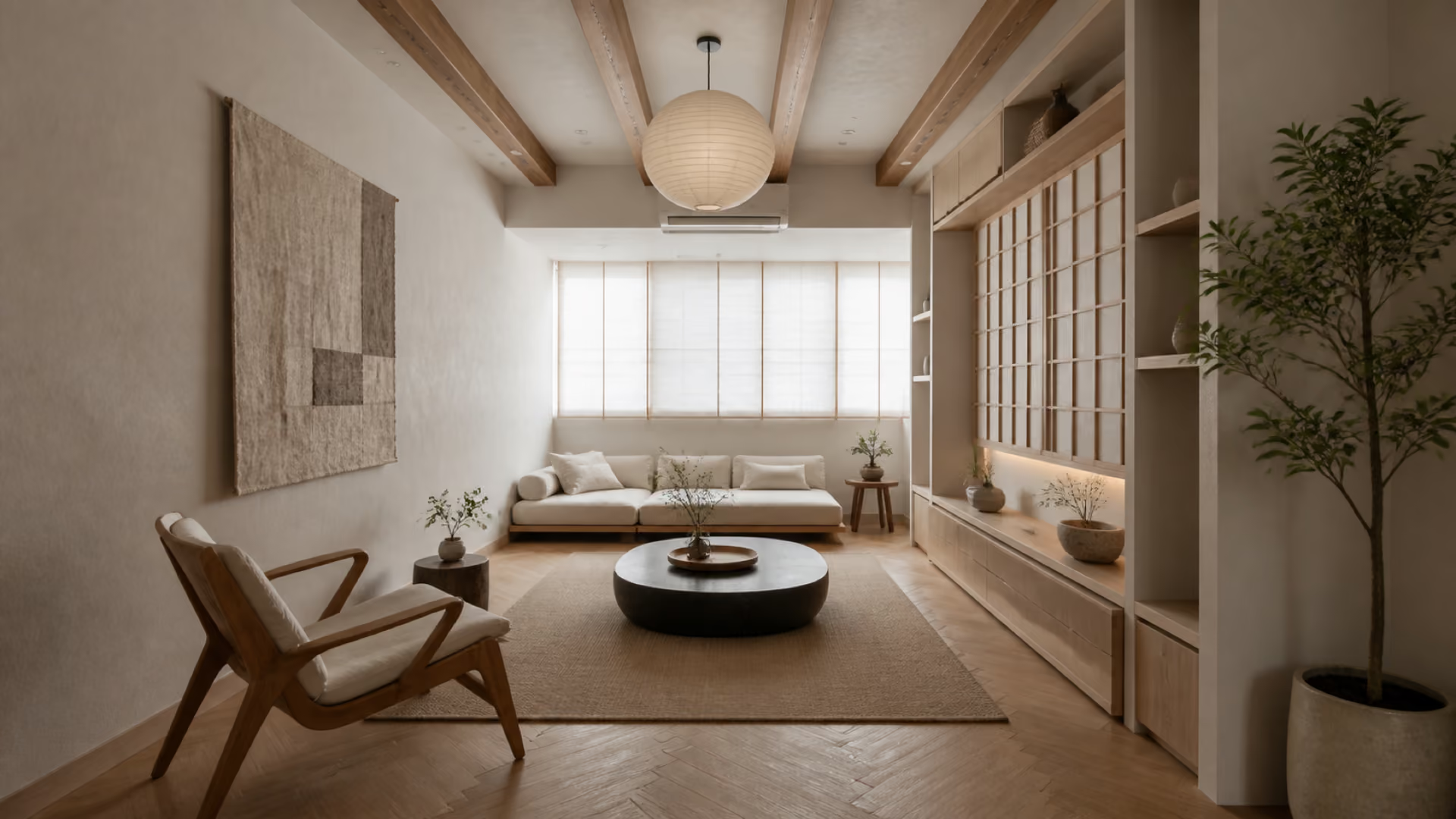
A living room can accommodate more natural texture than most other areas because it is usually protected from direct water exposure.
Potential combinations include:
Consider where direct sunlight enters the room before positioning timber furniture or woven fibres.
Kitchen materials must tolerate spills, heat, cleaning and frequent physical contact.
Natural stone can provide a distinctive focal point, but the exact variety must suit the intended use. An engineered surface such as sintered stone may be preferable for homeowners who prioritise easier daily care.
Timber tones can still be introduced through cabinetry finishes, shelving or furniture without using natural timber on the primary worktop.
Bathrooms require materials, waterproofing and finishes designed for regular moisture exposure.
Suitable possibilities may include:
The decorative surface should never be considered separately from the substrate, waterproofing, joints, drainage and ventilation behind it.
Bedrooms are well suited to softer natural details, including:
If the room receives strong afternoon sun, consider how ultraviolet exposure may affect finishes and fabrics over time.
Outdoor-facing areas require products specifically rated for their level of exposure.
An enclosed or sheltered balcony may accommodate suitable natural-fibre furniture, but an exposed balcony receives rain, sunlight and substantial humidity. Outdoor-rated engineered materials are often more dependable in these conditions.
Share your property type, household needs and approximate renovation budget. Luxior Concept can help you narrow the options before you commit to a material specification.
Get Material Suggestions on WhatsApp →
For cabinetry and built-in storage, material selection becomes part of the construction decision. See Luxior’s Custom Carpentry approach before deciding where premium natural finishes are worth the investment.
A cabinet’s visible finish is only part of its construction. The internal substrate, edge treatment, hardware and installation details also influence how the completed carpentry performs.
For example, a natural-looking cabinet may use veneer, laminate or another decorative surface over a plywood or engineered-board substrate. These options can look similar from a distance but differ in texture, repairability, consistency, cost and maintenance.
When reviewing a carpentry proposal, ask for the complete material specification rather than accepting a broad description such as “wood finish.”
Clarify:
This makes quotations easier to compare and reduces misunderstandings once fabrication begins.
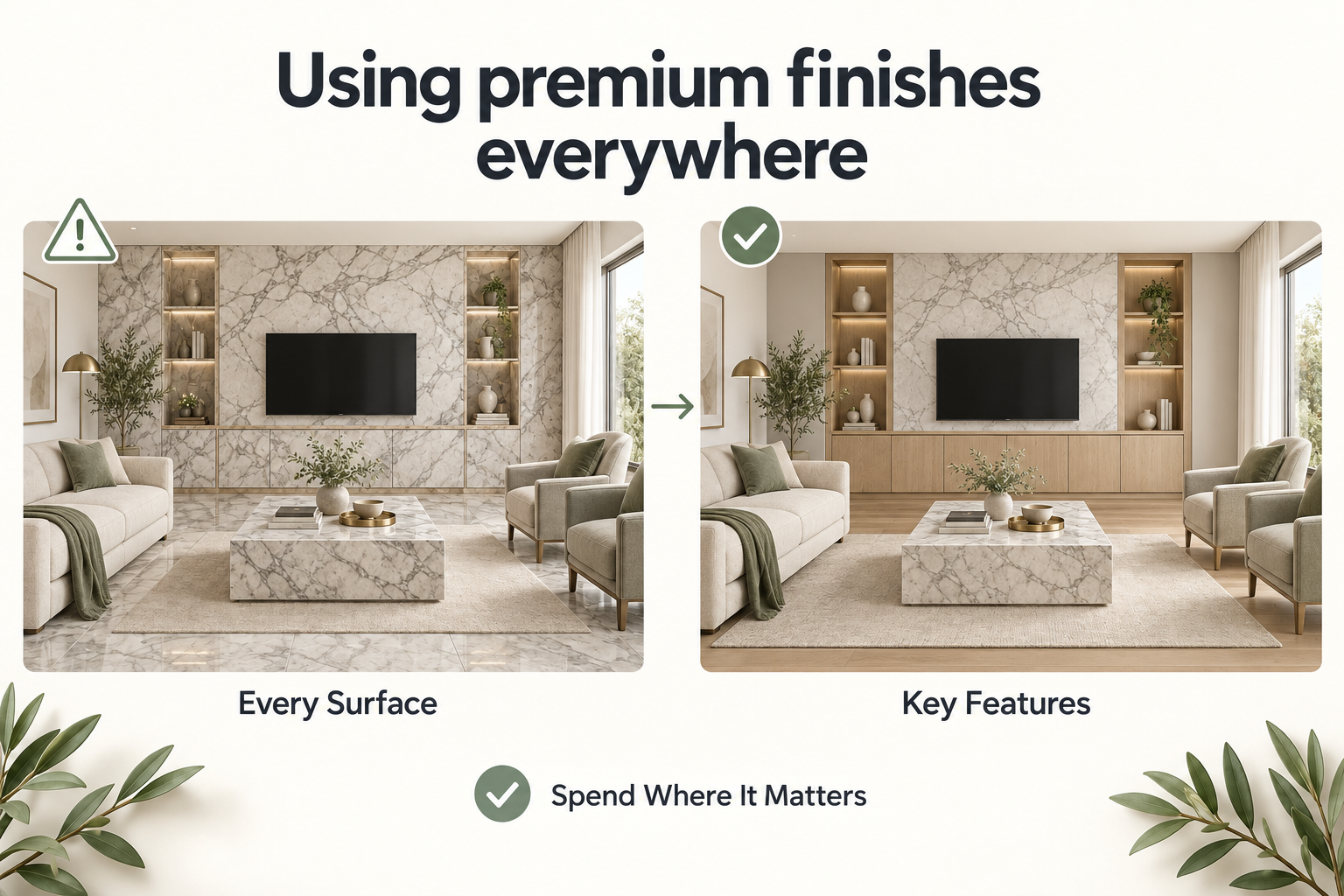
Natural materials do not need to cover the entire home to make an impact.
Concentrating the budget on a few important surfaces is often more effective than distributing expensive finishes everywhere. Consider investing where the material will be seen, touched or used most frequently.
These areas might include:
Use practical alternatives in service areas, inside cabinets or on secondary surfaces where appearance matters less than durability and ease of maintenance.
If you are still establishing an overall budget, Luxior’s renovation cost calculator can provide an initial estimate based on your property type and intended scope.
Colour and texture can appear different across a large surface or under your home’s lighting. View the largest available sample and, where possible, a completed installation.
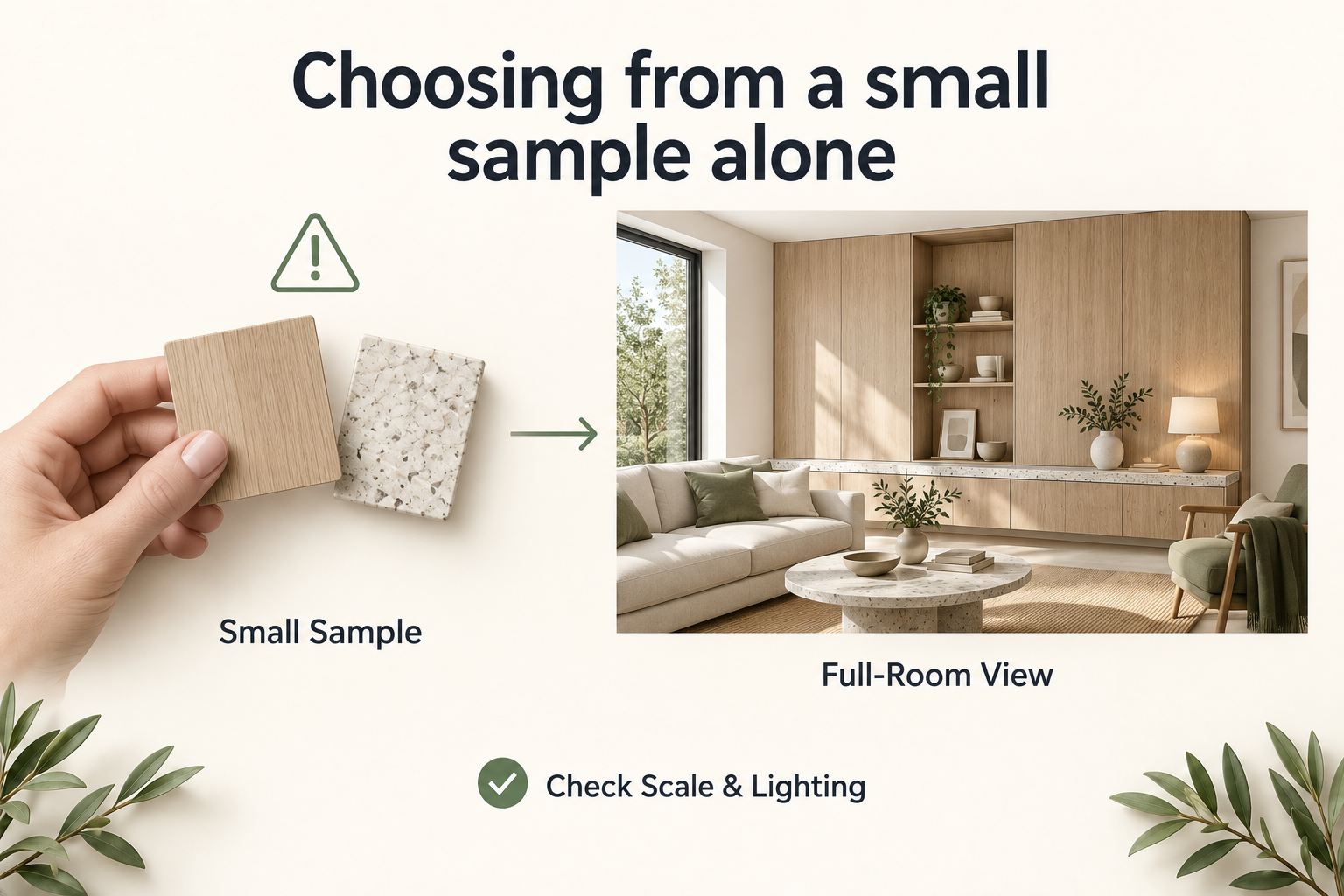
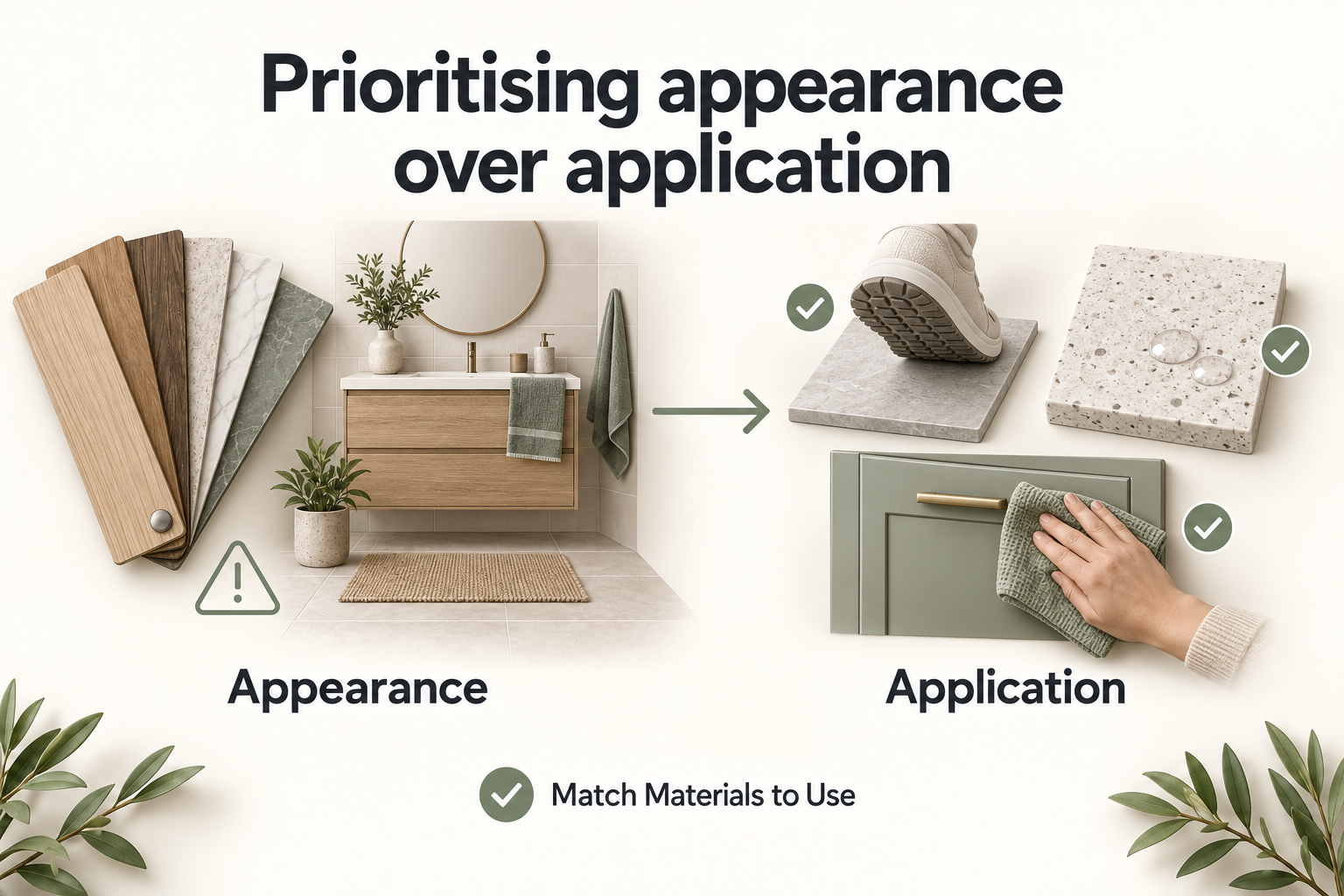
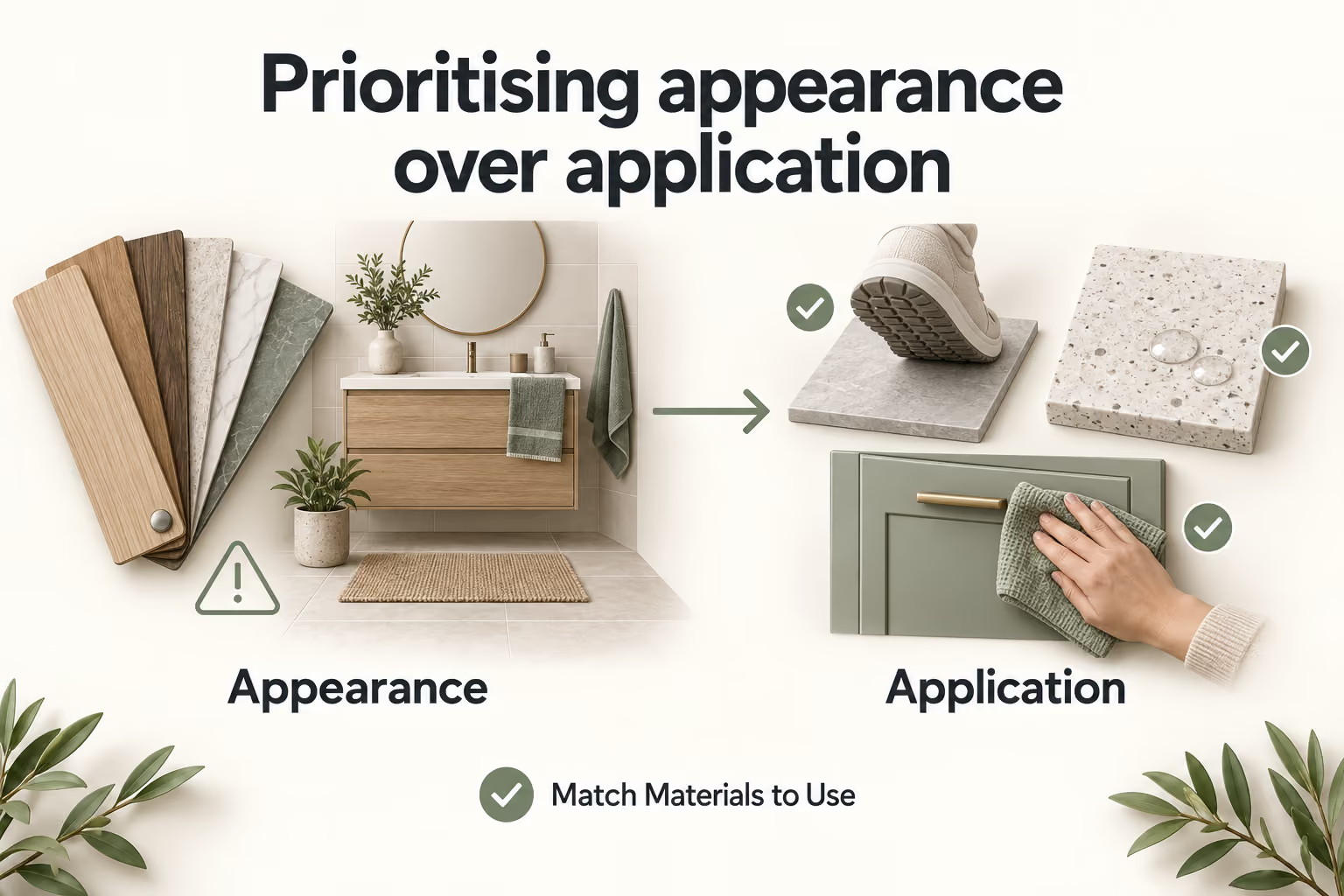
A beautiful material is not automatically suitable for a wet area, worktop or heavily used floor. Confirm its intended use and limitations first.
Different timber species, stone varieties, sealers and microcement systems can behave differently. Ask for the exact product specification.

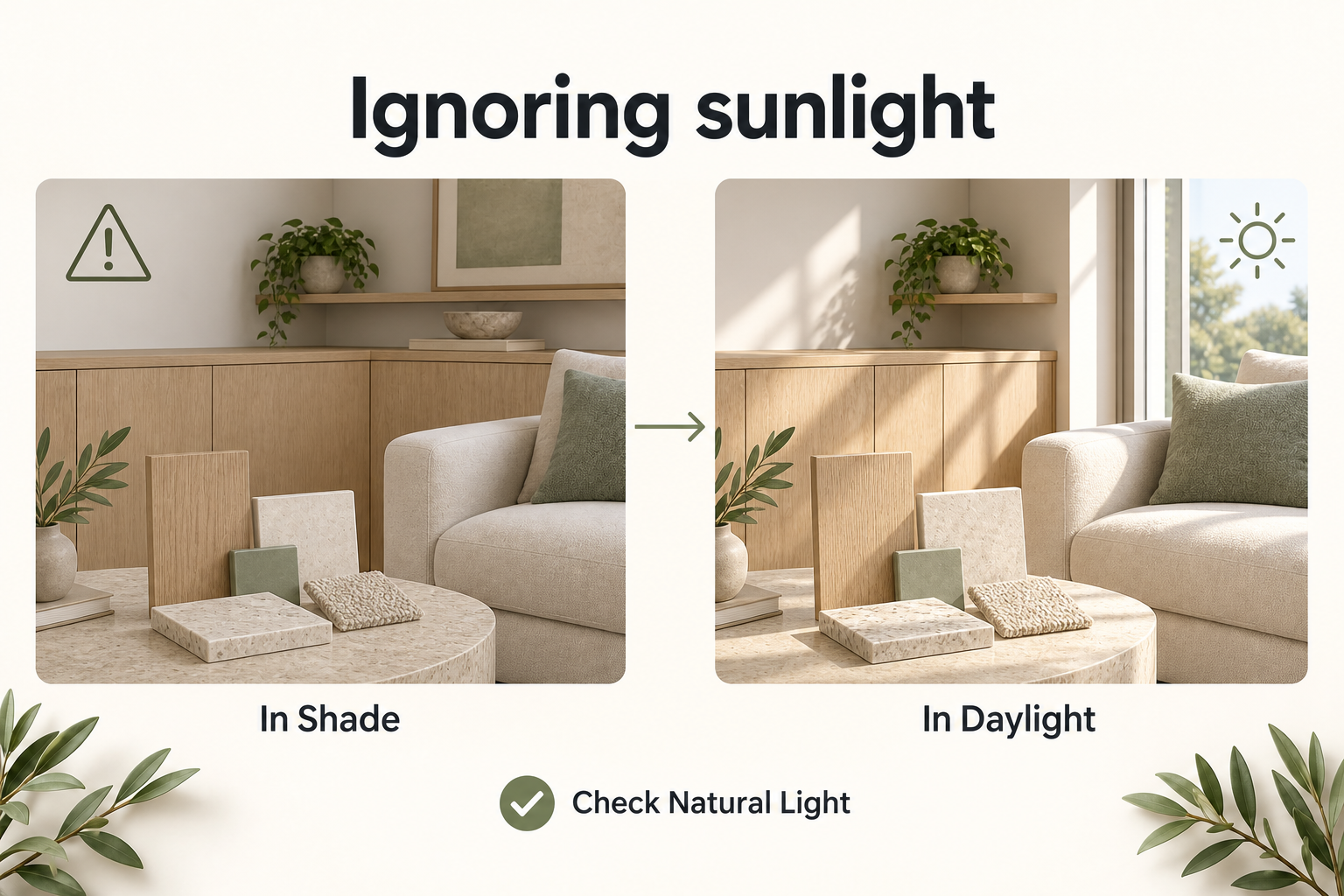
Direct sunlight can affect timber tones, natural fibres, fabrics and some coatings. Review the home’s orientation and window positions during material planning.
Ask what needs to be cleaned, sealed, refinished or replaced—and how frequently the manufacturer or supplier recommends doing it.

Natural materials often feel more intentional when used selectively. A restrained palette can also make future maintenance easier.
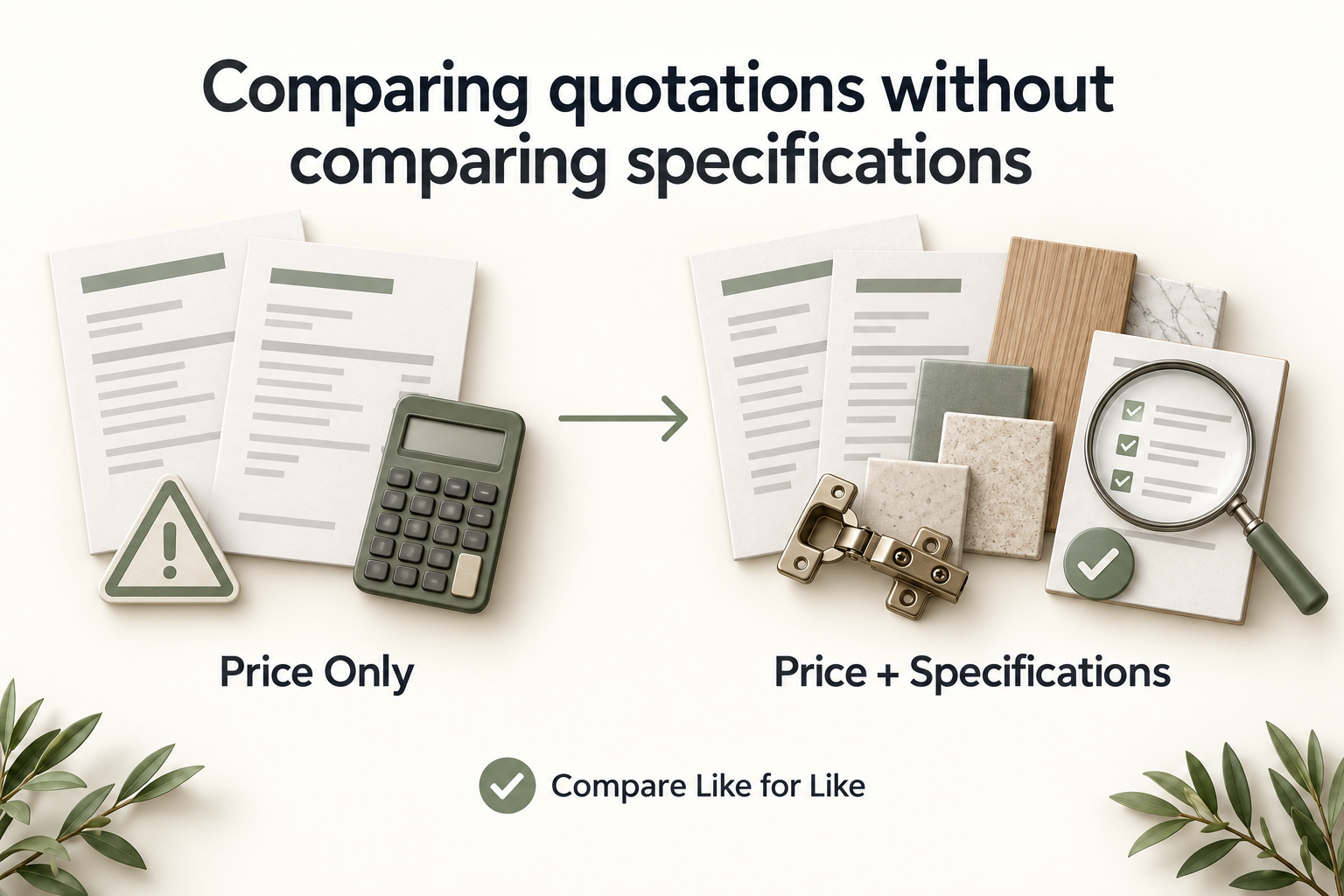
Two quotations may describe a surface similarly while allowing for different substrates, thicknesses, finishes or installation methods. Compare the complete specification, not only the price.
Bring this checklist to your material-selection meeting:
The most successful material palette is not simply the one that looks best on installation day. It should continue to work for the household using it.
Consider how often you cook, whether you have children or pets, how much sunlight enters each room and how much maintenance you realistically want to manage. Natural materials can bring distinctive warmth and character, but engineered alternatives may be the better choice in areas exposed to heavier use or moisture.
A thoughtful interior can use both. The goal is not to maximise the amount of natural material—it is to place each material where its appearance and performance make sense.
Share your floor plan, renovation stage and approximate budget. We’ll help you begin comparing suitable materials for your home and lifestyle.
Chat With Luxior Concept on WhatsApp →
Clarify:
This makes quotations easier to compare and reduces misunderstandings once fabrication begins.
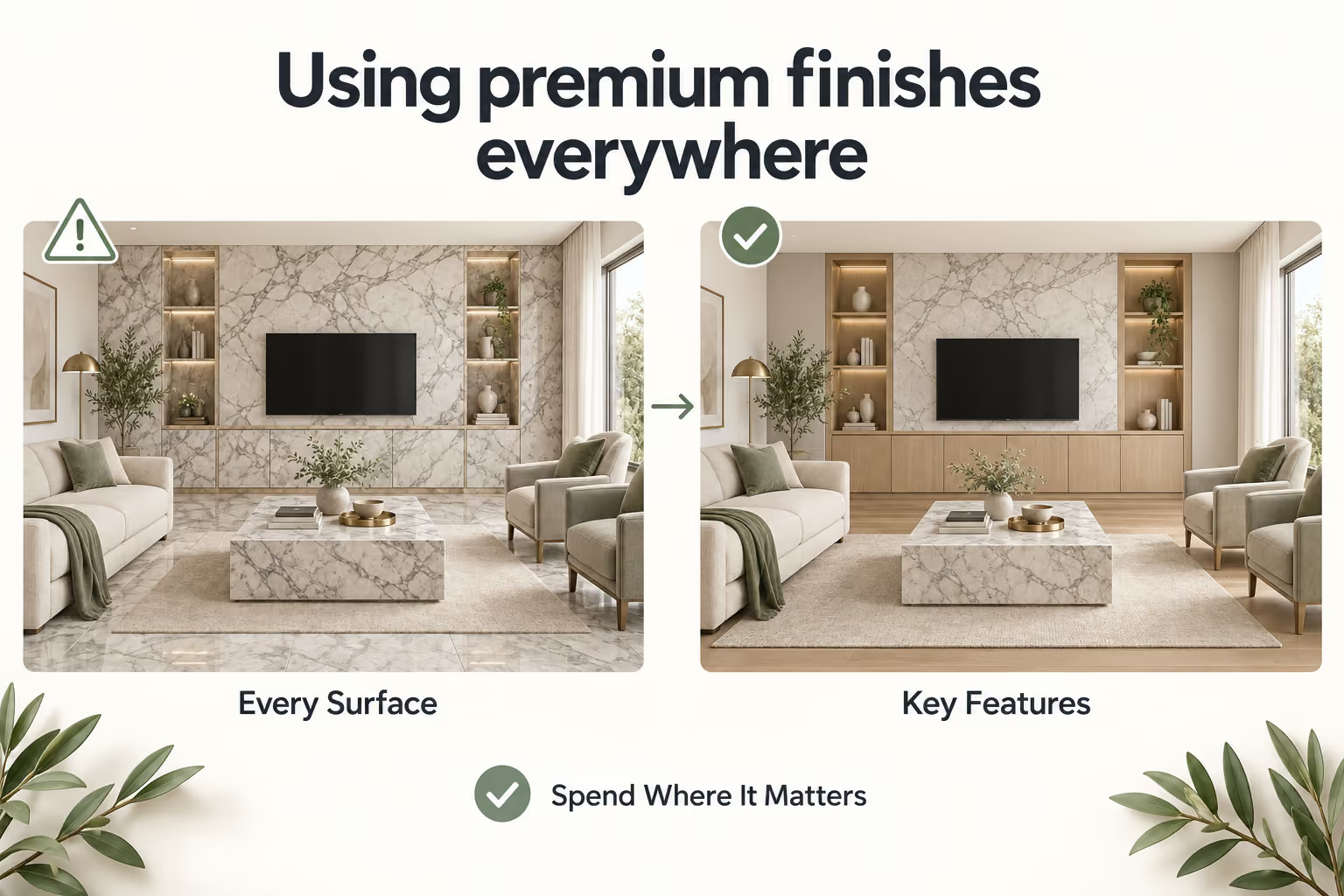
Natural materials do not need to cover the entire home to make an impact.
Concentrating the budget on a few important surfaces is often more effective than distributing expensive finishes everywhere. Consider investing where the material will be seen, touched or used most frequently.
These areas might include:
Use practical alternatives in service areas, inside cabinets or on secondary surfaces where appearance matters less than durability and ease of maintenance.
If you are still establishing an overall budget, Luxior’s renovation cost calculator can provide an initial estimate based on your property type and intended scope.
Colour and texture can appear different across a large surface or under your home’s lighting. View the largest available sample and, where possible, a completed installation.
A beautiful material is not automatically suitable for a wet area, worktop or heavily used floor. Confirm its intended use and limitations first.
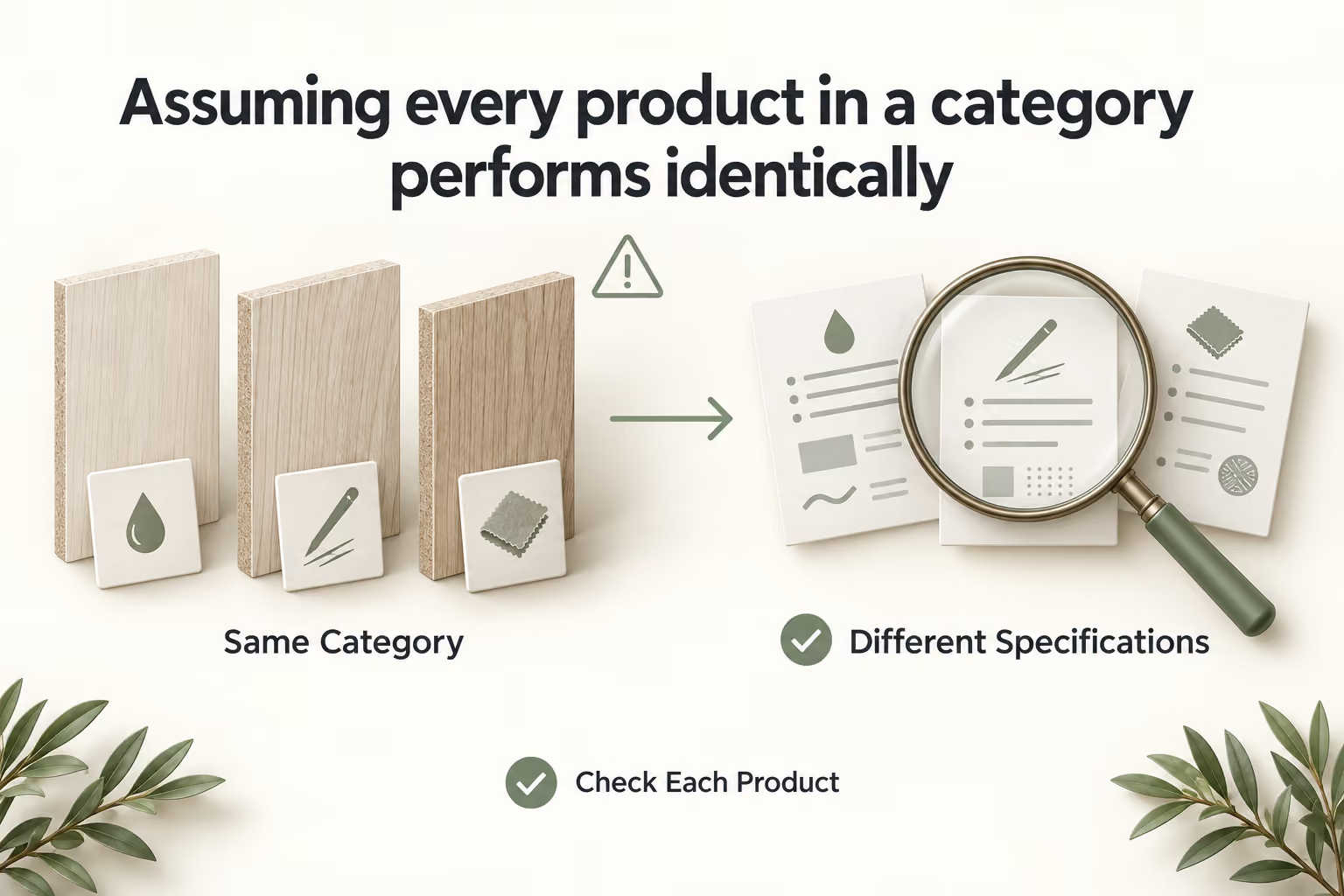
Different timber species, stone varieties, sealers and microcement systems can behave differently. Ask for the exact product specification.
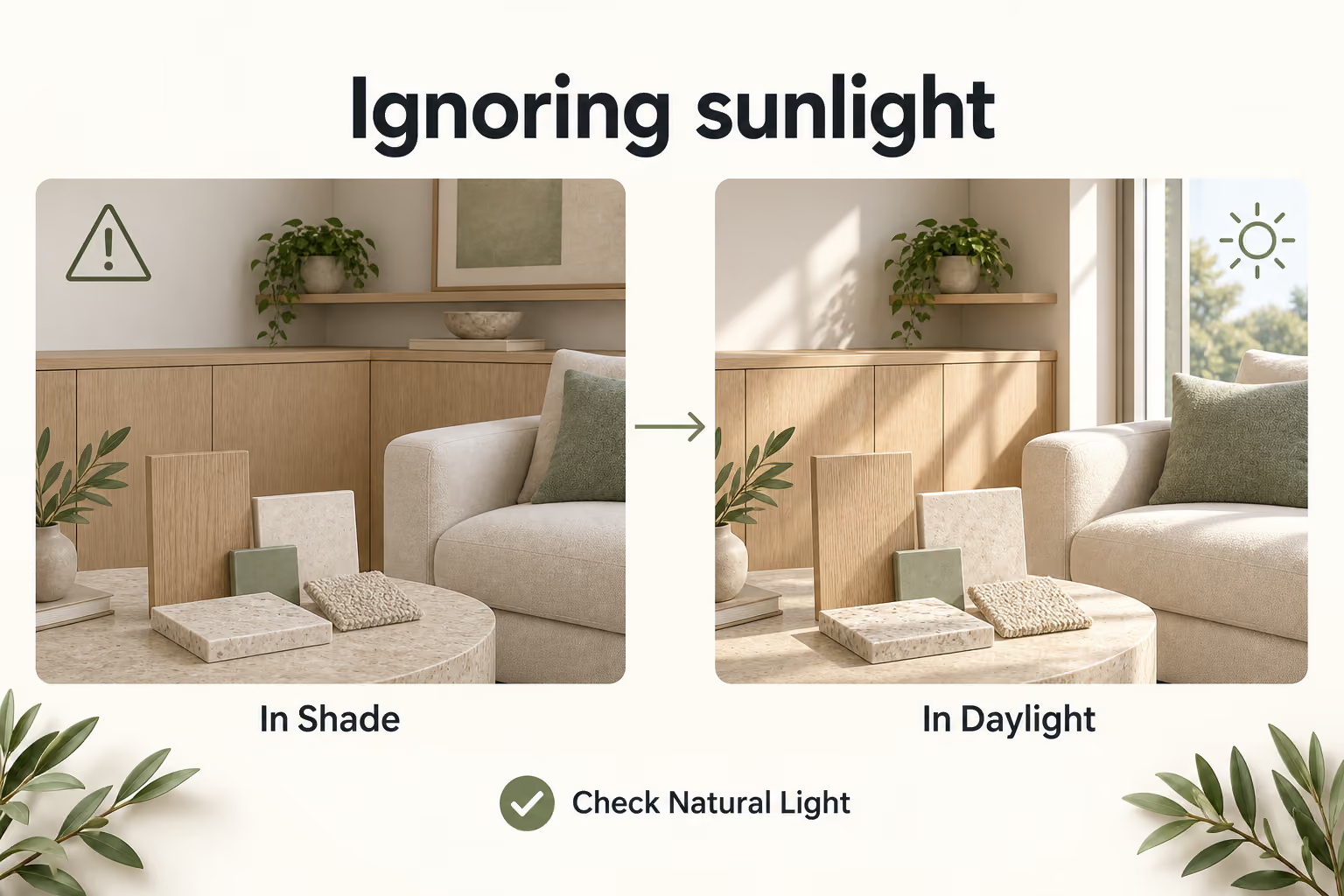
Direct sunlight can affect timber tones, natural fibres, fabrics and some coatings. Review the home’s orientation and window positions during material planning.
Ask what needs to be cleaned, sealed, refinished or replaced—and how frequently the manufacturer or supplier recommends doing it.
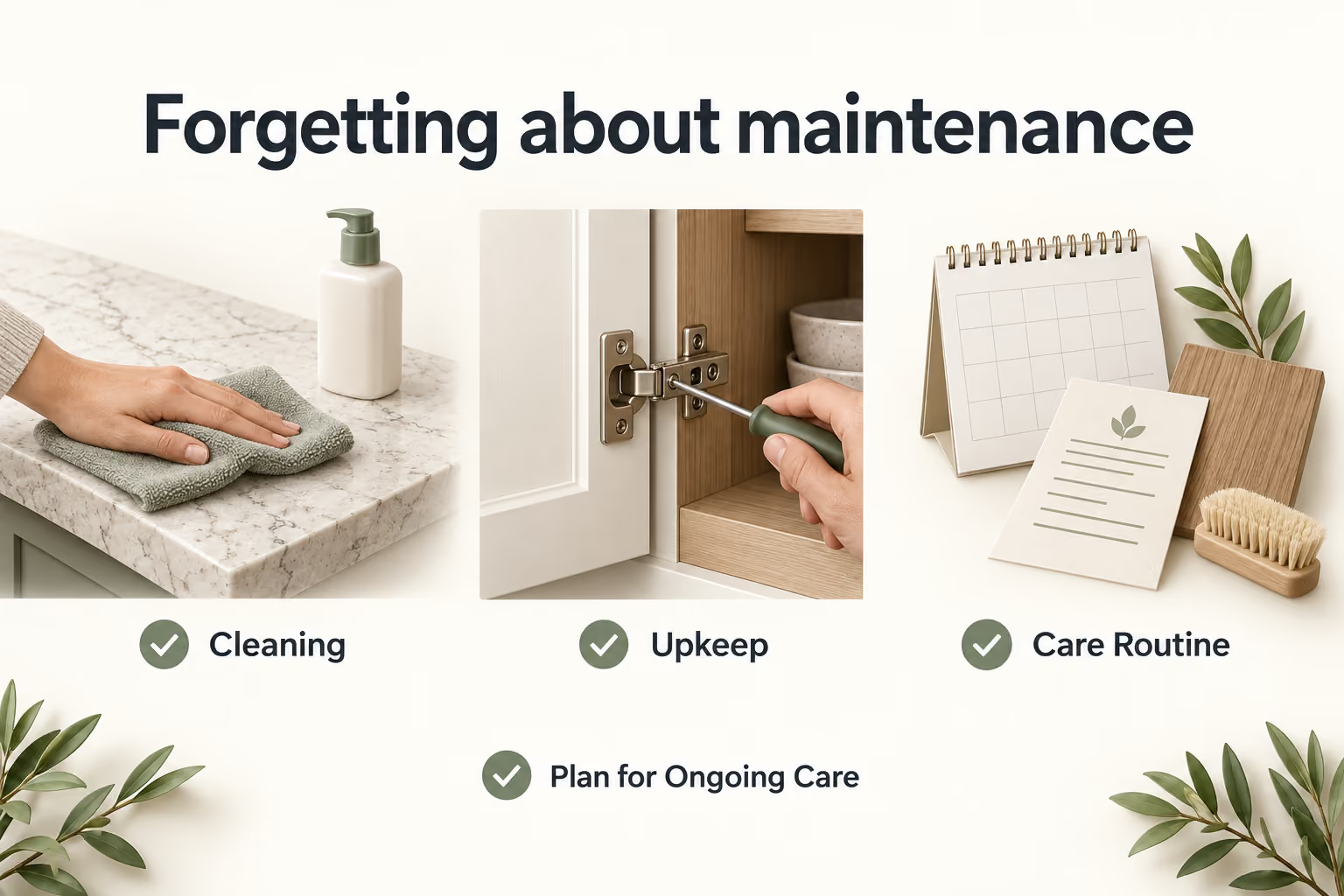
Natural materials often feel more intentional when used selectively. A restrained palette can also make future maintenance easier.
Two quotations may describe a surface similarly while allowing for different substrates, thicknesses, finishes or installation methods. Compare the complete specification, not only the price.
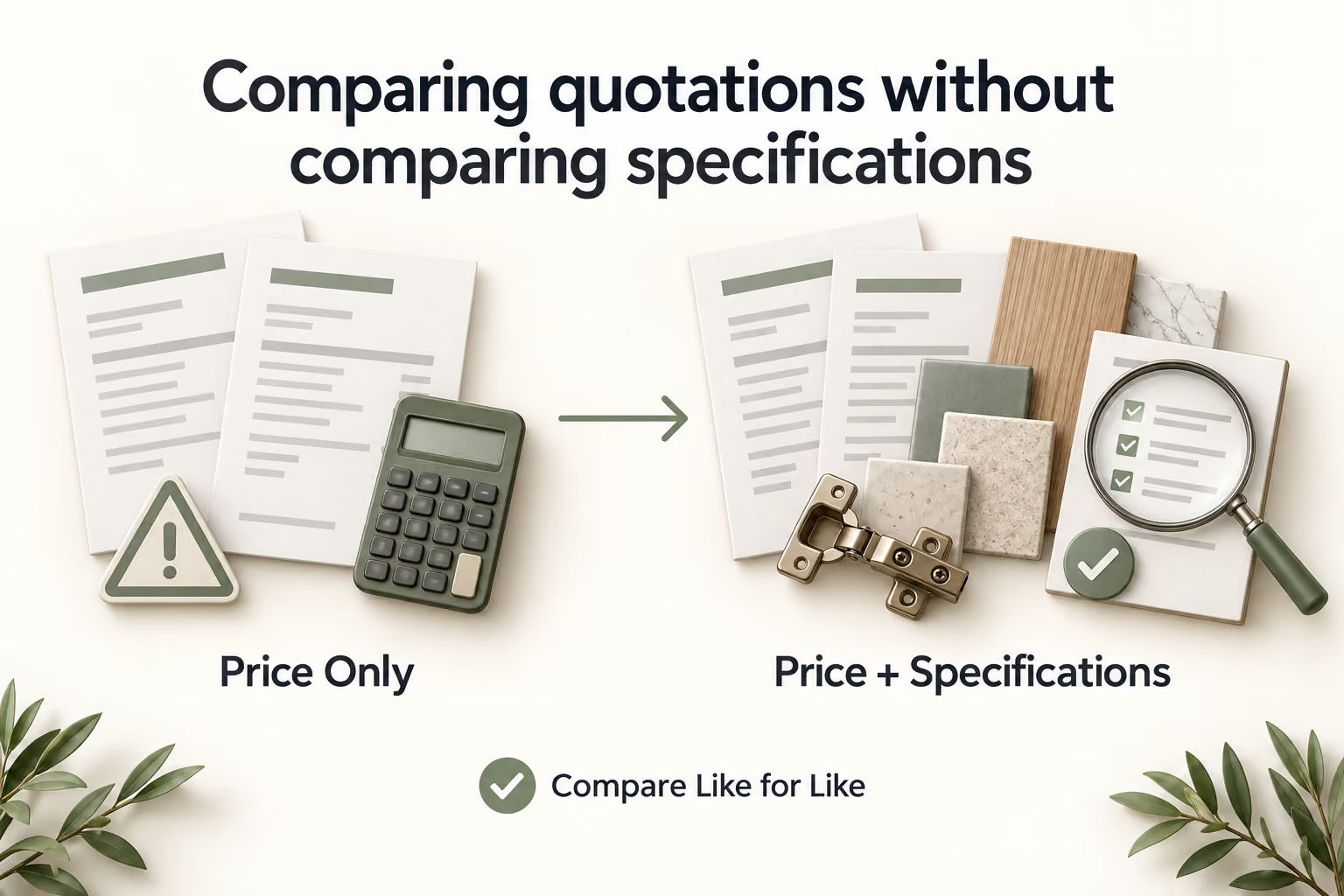
Bring this checklist to your material-selection meeting:
The most successful material palette is not simply the one that looks best on installation day. It should continue to work for the household using it.
Consider how often you cook, whether you have children or pets, how much sunlight enters each room and how much maintenance you realistically want to manage. Natural materials can bring distinctive warmth and character, but engineered alternatives may be the better choice in areas exposed to heavier use or moisture.
A thoughtful interior can use both. The goal is not to maximise the amount of natural material—it is to place each material where its appearance and performance make sense.
Share your floor plan, renovation stage and approximate budget. We’ll help you begin comparing suitable materials for your home and lifestyle.
Chat With Luxior Concept on WhatsApp →
Not necessarily. Its suitability depends on factors such as the timber species, board construction, indoor conditions, subfloor and installation method. Engineered timber is often considered where greater dimensional stability is preferred.
Engineered timber flooring normally has a real timber wear layer bonded to a layered core. The composition and thickness vary by product, so check the full specification.
No. Sintered stone is an engineered surface. It can reproduce some of the visual qualities of natural stone while offering different performance and maintenance characteristics.
Yes, provided the particular product is kept in suitable conditions. Protect it from prolonged direct sun, rain and persistently damp, poorly ventilated areas.
Some complete microcement systems are designed for wet areas, but suitability depends on the product, substrate preparation, waterproofing, installation and protective coating. Confirm the complete system rather than relying on the finish name alone.
Many natural stones benefit from sealing, but requirements vary by stone, finish and application. Follow the recommendations for the selected slab and sealer.
Not always. Cost depends on the material, grade, source, installation complexity and area covered. Using a premium natural material selectively can sometimes be more effective than choosing it throughout the home. For an initial renovation range, use Luxior’s renovation cost calculator before deciding where to invest more.



.avif)